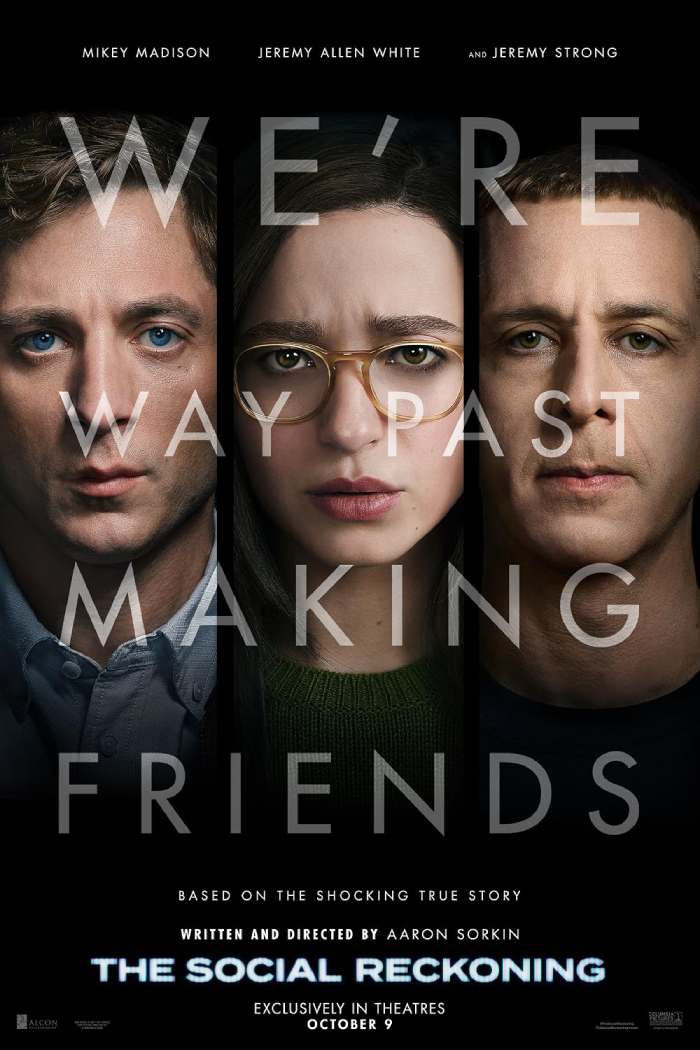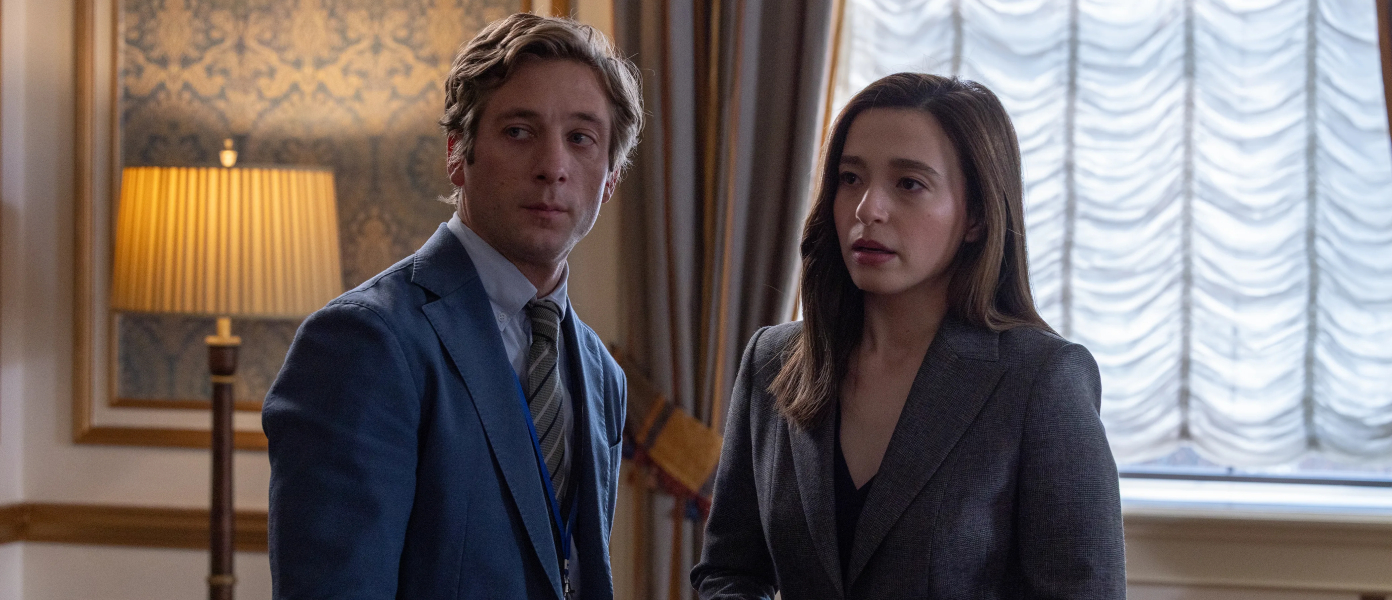

Follows Frances Haugen, a young Facebook engineer, who enlisted Wall Street Journal reporter Jeff Horwitz to blow the whistle on the social network’s most guarded secrets.
The Social Reckoning presents a dramatized account of Facebook’s role in some of the most culturally and politically important events of the past ten years, especially those involving misinformation, platform responsibility, and the events leading up to January 6. The problem is that these events are still being discussed, argued over, and examined in real time, so the film feels less like a sincere reflection and more like a retelling of news headlines we haven’t fully processed yet.
The movie is good enough on its own. The acting is solid, the production value is high, and the plot is easy to follow. Yet I never felt it established a clear identity. Although it aims to give viewers a direct, scene-by-scene retelling of what actually happened, it also tries to create interesting character development and emotional drama about people who find themselves in Facebook’s sphere of influence. The result is a film that often hovers between documentary-style reenactment and conventional Hollywood drama.
The film’s point of view is also difficult to overlook. It is clearly critical of Facebook and the consequences of giving billions of people access to a global platform. The film’s main argument is clearly expressed in one statement concerning giving everyone a microphone rather than just a voice. Whether you agree with that view or not, The Social Reckoning never really tries to hide its position.
The film is difficult for me because I recall many of these events happening in real time. Debates about misinformation, algorithmically driven engagement, and January 6 are still part of our current cultural discussions. As a result, much of the film seems to explain things the audience already knows. The film includes lengthy sections that define terms, lay out the controversies, and build toward moments whose outcomes are already known to anyone who has kept up with the news over the past five years.
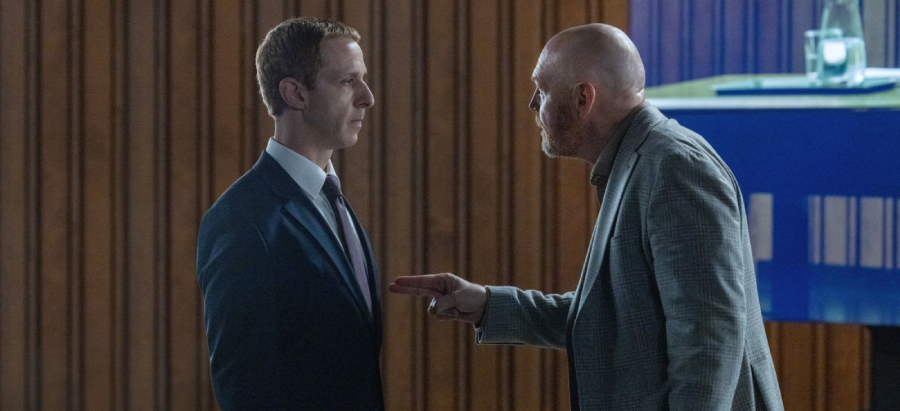
Although Jeremy Strong deserves recognition for taking on the role, his depiction of Mark Zuckerberg never satisfied me. This is a particularly tough challenge since the film encourages comparisons to The Social Network; Jesse Eisenberg’s portrayal of Zuckerberg is so iconic that it’s hard to avoid the comparison, and unfortunately Strong’s performance never convinced me to the same extent.
That comparison continues to loom over the whole film. The Social Reckoning isn’t The Social Network, and in many respects it would be unfair to expect it to be. Nevertheless, the comparison is unavoidable. David Fincher’s movie wasn’t really concerned with Facebook itself, but rather with ambition, ego, friendship, and the psychology of the people who created a world-changing platform. The Social Reckoning, on the other hand, focuses more on what Facebook eventually became and how its employees and insiders felt about the consequences. Although this approach may sound interesting in theory, I don’t think it is nearly as engaging in practice.
One problem is that the story doesn’t seem to have much significance. Facebook is still one of the most powerful companies in the world and may have been even more influential than it was at the time shown in the film. Because of this, the movie struggles to give the story a sense of importance or a firm conclusion. It presents a narrative about a reckoning that, in reality, did not take place. This mismatch made it hard for me to become emotionally involved with the message the film was trying to convey.
The supporting actors are all pretty good, but most characters seem to exist mainly to convey information, offer comic relief, or stand in for different points of view within the wider Facebook ecosystem. As a result, very few are developed enough to become truly memorable.
The film The Social Reckoning is perfectly watchable, but I don’t think I’d ever see it again. It seems to be little more than an examination of Facebook, more like an adaptation of a situation we are all still going through. It’s possible that in another ten years the material would have greater significance. At the moment, it mainly acts as a reminder of events which have not been resolved.
Above all, the film is cast in the shadow of The Social Network, a film that remains one of the defining works of the 21st century. Because it tried to follow that film with a different cast, a different creative team, and a less interesting story, it was always going to be a difficult task. Although The Social Reckoning isn’t a bad movie, it still makes me wonder why it needed to be made.
In Theaters Friday, October 9th