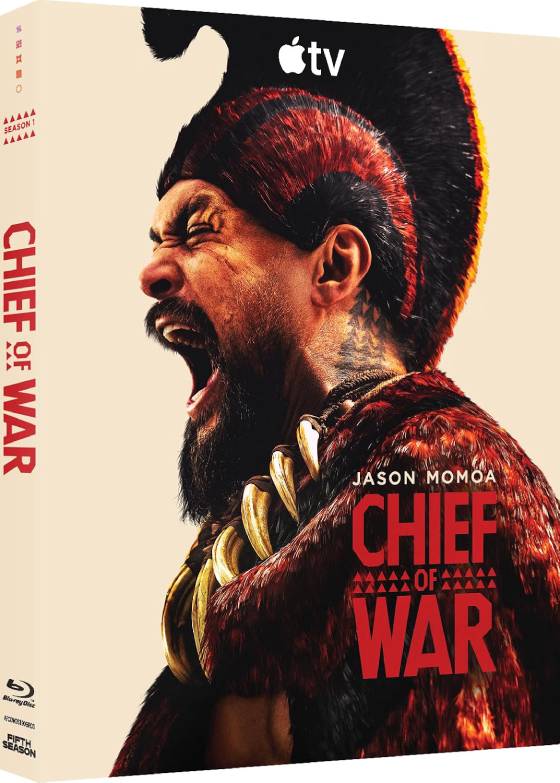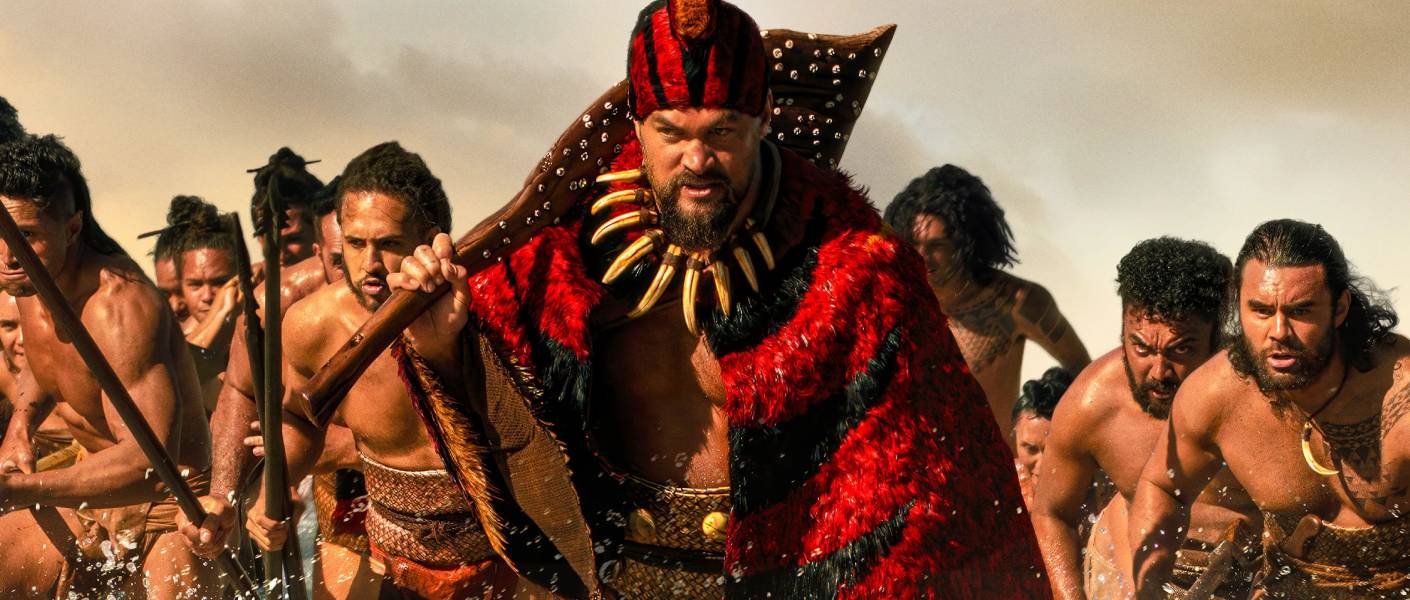

The story of the unification of the Hawaiian Islands from an indigenous perspective: a Hawaiian war chief joins a campaign to unite the warring islands in order to save them from the threat of colonization.
“Chief of War” with Jason Momoa is a very rare kind of historical drama in that it’s an epic on a huge scale which is also intensely personal in its aims. Set in the Hawaiian Islands in the late 1700s, it tells the story of Ka’iana (Jason Momoa), a warrior and ali’i who finds himself in the thick of it all as rival kingdoms fight for power, the community is in flux, and the threat of foreign influence looms. Ka’iana has to deal with the competing demands of family, community, and a very different vision of the future of Hawai’i.
That premise gives the series all the room it needs for the standard fare of a high-end historical drama (alliances, betrayals, romance, war, power-hungry rulers, etc.). It’s most interesting, though, when it moves beyond that. Rather than just using Hawaiʻi as an exotic setting, it actually shows it as a complex society with its own political system, its own spirituality, its own martial traditions, and its own ideas about what it means to be a leader.
One of the production’s real accomplishments is the sheer amount of ʻŌlelo Hawaiʻi that’s been used. It’s not just there for the sake of it; it’s used to create the rhythm and the point of view of the story. The traditional lua, the cultural practices, the costuming (all of which have been thoughtfully designed) are all part of the texture. That’s been underpinned by actual partnerships with local experts and institutions. It gives the show a real sense of cultural specificity, which is something that so many Hollywood depictions of Hawaiʻi have failed to achieve.
The result is absolutely not a museum piece. “Chief of War” is muscular, urgent television and makes full use of the mountains, shorelines, forests and open water of the islands. The scenery is stunning, but the camera doesn’t turn Hawai’i into a postcard. The beauty is there alongside danger, conflict, work and political consequence.
The battle sequences are just as good. They’re very much in the realm of the visceral and the chaotic, firmly rooted in the realities of close-quarters fighting. You get a very distinct feel from the use of traditional weapons and fighting styles, and the way it’s staged is very much about the cost of violence rather than just war for the sake of war. Jason Momoa is obviously a very physical actor, and that works perfectly with the material, though it does ask quite a lot of him.
Momoa as Ka’iana is all ferocity and uncertainty. He’s a man who can command the room in a fight, but is very much susceptible to the pressures of family, of leadership and of history. He’s torn between personal loyalties and the demands of politics, between his own identity and the disruptive force of a wider colonial threat. Momoa is at his very best in the quieter moments when Ka’iana’s strength is simply gone, and he’s left with doubt and watchfulness.
The whole ensemble cast is of one piece. The rulers, the warriors, the relatives, and the political enemies of Ka’iana are not just hurdles in her way. They are all different expressions of the various ideas about unity, sovereignty, duty, and survival. The politics of the series stems from family relationships, and family tensions are rarely anything other than political tensions. That interweaving is what gives the drama so much of its power.
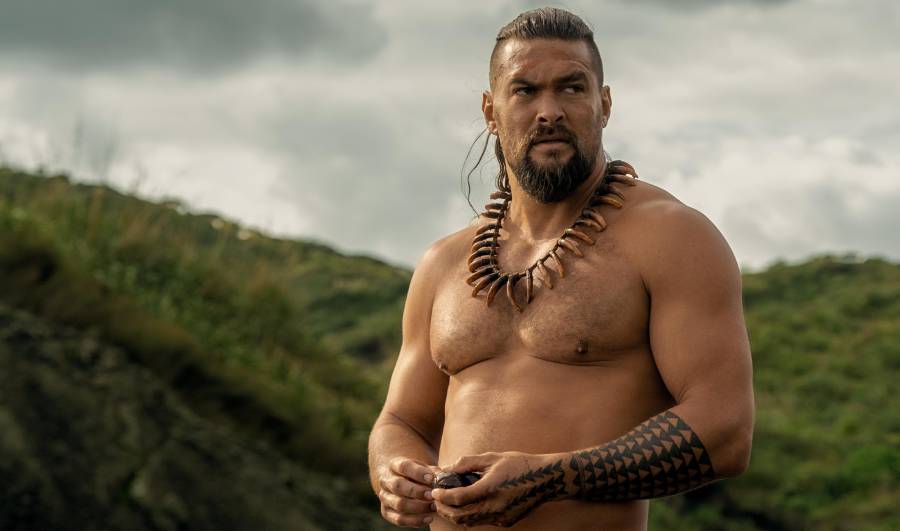
The series also gets points for introducing a broad audience to late 18th-century Hawaiian history and to Ka’iana in particular (a figure who is virtually unknown outside of Hawai’i). For a lot of people, the image of the islands in popular culture is just beaches, resorts, and a very simplistic notion of paradise. “Chief of War” is a very necessary corrective to that. It puts the ali’i, inter-island politics, genealogy, warfare, and the first inklings of colonial contact firmly at the heart of the story.
Its cultural impact may be just as significant as its dramatic achievements. It’s sparked discussion amongst families, students, teachers and the younger generation about Hawaiian history, genealogy, ʻŌlelo Hawaiʻi and the aliʻi. A TV drama can’t in any way substitute for real historical study, but it can generate interest, and “Chief of War” has done that in spades.
As historical fiction, the series is absolutely going to take liberties. The timelines, the relationships, and the events are all compressed and/or fictionalized to create a more cohesive narrative. On a number of occasions, spectacle is clearly going to be the priority over any kind of historical accuracy. You have to treat it as a piece of fiction rather than as a historical record.
The writing also has an unevenness to it in terms of where it spends its attention. There are a number of secondary storylines, friendships and romantic relationships that could have used a bit more emotional depth. At times, Ka’iana feels less like a fully realized, contradictory human and more like a container for the show’s broader themes of identity, unity, and resistance. Momoa gives the character weight, just the script doesn’t always provide the nuance that weight requires.
Still, those flaws in no way detract from the series’ overall success. “Chief of War” is audacious, very much a visual spectacle and firmly rooted in its cultural context. It achieves the requisite scale of an epic without losing the human element at its core. The fighting is excellent, the politics are compelling, and the series has a very distinct identity through its use of the Hawaiian language and culture.
More than anything, the series broadens the range of histories that get to be on mainstream TV. It allows the viewer to see Hawai’i not as some backdrop for someone else’s adventure, but as the place of its own story. That shift in perspective is what gives “Chief of War” such real power, and it’s very much worth watching.
Now available on Blu-ray™