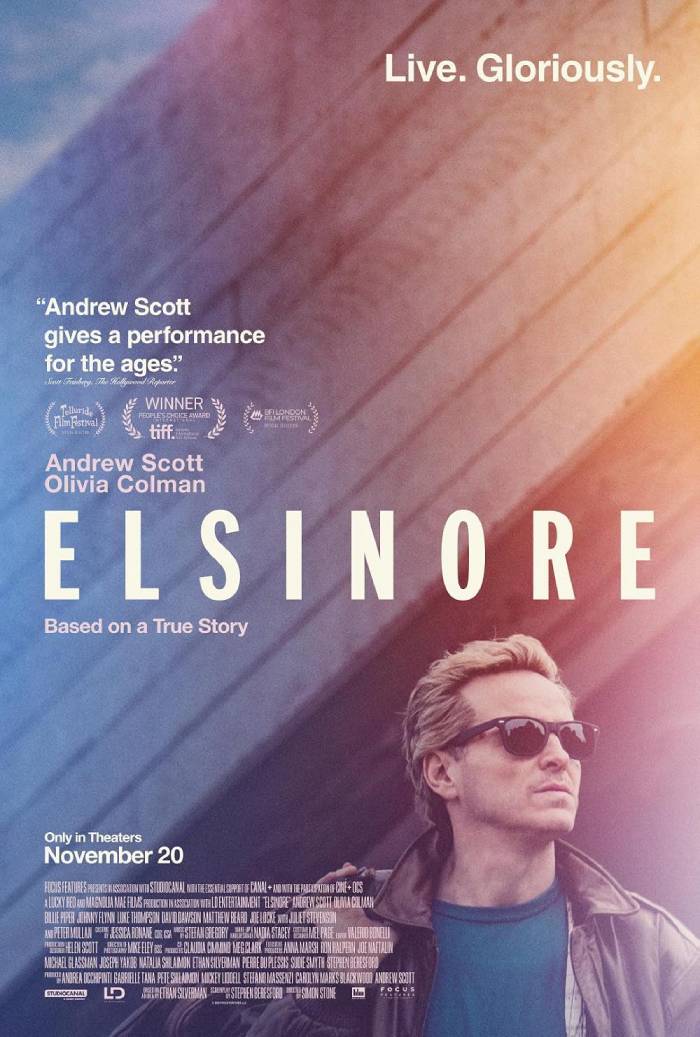

A powerful, deeply moving, and inspiring story of the actor Ian Charleson, who faced incredible odds while preparing to give the performance of his life in Hamlet at the National Theatre in London.
“Elsinore” tells the true story of Scottish actor Ian Charleson during the final months of his life as he battles AIDS while preparing to play Hamlet at London’s National Theatre. With his health rapidly deteriorating, Charleson becomes determined to make it onto the stage, choosing to spend what time he has left doing the thing that has always defined him: acting.
There’s a really great movie somewhere inside “Elsinore,” and occasionally Andrew Scott gets frustratingly close to showing you exactly what that movie could have been. Charleson’s desire to be seen as an actor rather than defined by his illness gives the story a compelling emotional center, even when the movie around him doesn’t always know how to make the most of it.
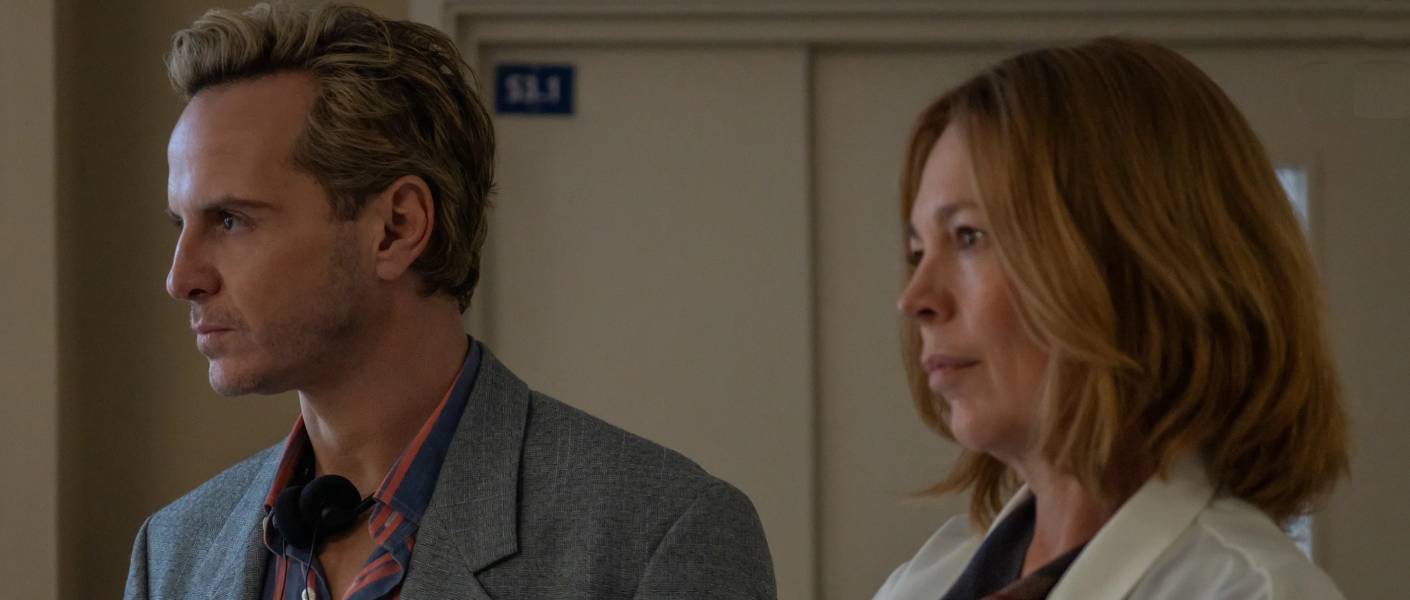
Scott is phenomenal here and easily the best reason to see the movie. There’s tremendous sadness underneath his performance, but he never turns Charleson into someone who exists solely for us to feel sorry for. He’s funny, stubborn, frustrated, warm, and occasionally difficult. Most importantly, Scott completely sells Charleson’s determination to be seen as an actor first and an AIDS patient second.
Some of my favorite moments are watching Charleson work through Hamlet and pour everything happening in his life into the performance. You understand why getting on that stage means so much to him, which makes it frustrating that the movie sometimes seems afraid to sit still and let Scott perform. You have Andrew Scott, an accomplished Shakespearean actor, playing Hamlet. I desperately wanted the film to give him more room to go for it.
The movie gets particularly interesting when Charleson is challenged over his decision not to live publicly as a gay man and his insistence on being defined by his work rather than his sexuality or illness. Does he have a responsibility to represent a community being devastated by the same disease, or should a dying man be allowed to decide for himself what defines his life? It’s one of the few times the movie really challenges Charleson rather than simply sympathizing with him, and I wanted more of that.
“Elsinore” can feel surprisingly restrained for a story with this much emotion underneath it. Most of the people surrounding Charleson are compassionate and supportive, which takes away some of the friction I kept waiting for. The editing doesn’t always help either. Some moments move on too briskly just when I wanted them to breathe, while others seem to work too hard to manufacture emotion from material that should already be powerful enough on its own.
That disconnect ultimately held the movie back for me. I understood what Charleson was fighting for and why making it onto that stage mattered so much to him, but I spent too much of the movie understanding those emotions instead of actually experiencing them. Thankfully, Andrew Scott repeatedly manages to break through that distance.
There’s something genuinely heartbreaking about watching Charleson pour himself into Hamlet, not because getting on that stage is somehow going to save him, but because acting is how he has chosen to remain himself as his illness takes nearly everything else away. Andrew Scott is phenomenal, and there’s a lot about Ian Charleson’s story that stuck with me. I just wish “Elsinore” had hit me nearly as hard as Andrew Scott’s performance did.
In Theaters Friday, November 20th