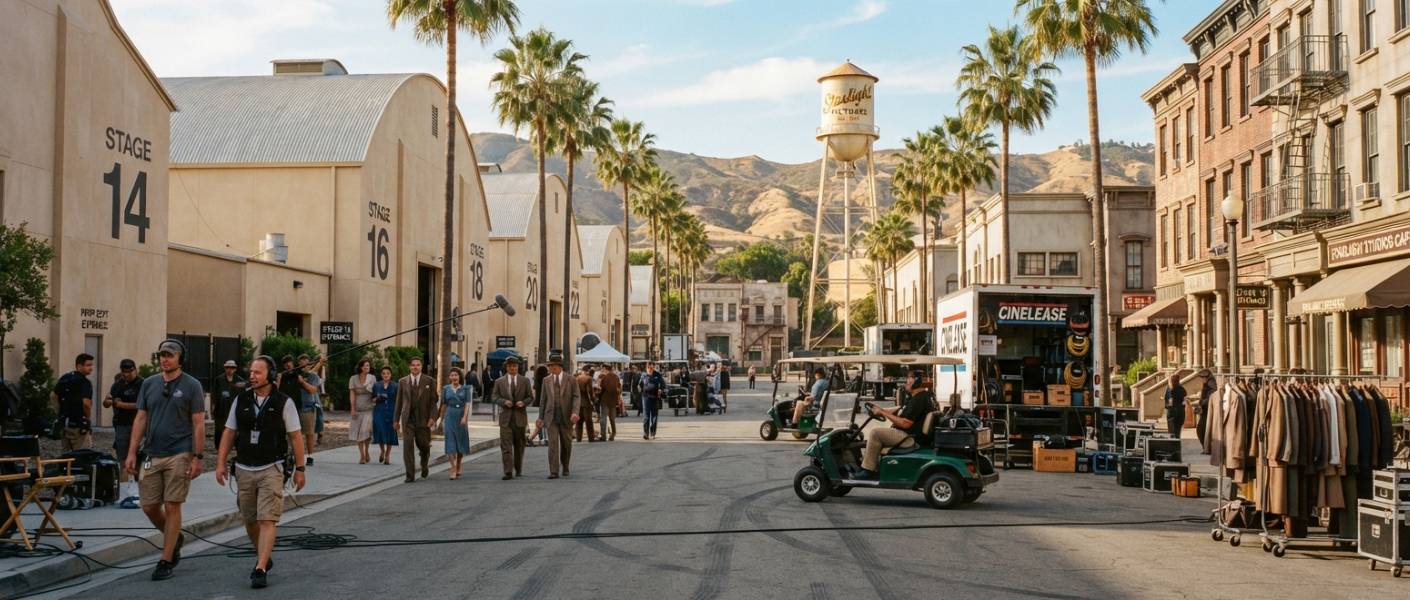
Film studios and other entertainment production events are composed of many people who provide various services for the entertainment industry. Some examples include: actors, directors, camera operators, technicians, journalists, contractors, and visitors. Although all of these people assist in providing services for the entertainment industry, each person provides a service that is required by some portion of the industry. Therefore, while each person provides a service for the entertainment industry, they may not necessarily have to access the same areas. For example, a camera operator may need to gain access to a sound stage; however, a journalist may only need to obtain authorization to attend a press conference. Therefore, managing each individual’s needs is one of the most critical elements of planning for any production.
Access control allows studios and events to decide who is allowed into specific areas and at what times. By using identification systems, electronics, visitor registration, and security staff, production companies can keep track of their people, equipment, and sensitive information while maintaining order within the operation.
What Is Access Control in Film Studios and Entertainment Events?
Access control is defined by the rules, processes, and technologies used to restrict access to a location. Film production will determine who can access locations such as the soundstage, editing suite, equipment room, production office, and/or backstage.
The level of access required by a cast member, technical crew member, administrative staff member, outside contractor, or visitor will depend upon the specific requirements of that person’s job.
The access rights needed by a lighting technician would likely include entry to filming locations and equipment storage. On the other hand, the access rights of a visiting journalist would likely be limited to specific areas where interviews take place. Having clearly established access rules helps eliminate ambiguity regarding who can go where and when, as well as reducing the likelihood that someone will enter an area without permission.
Why Is Access Control Important for Film Production?
Filmmaking requires a lot of high-value equipment, sensitive creative materials, and numerous personnel operating within tight timeframes. When studios fail to put in place proper access control systems, they may experience unnecessary operational problems as well as security issues.
An additional area of concern relates to the security of costly production equipment. Production equipment such as cameras, lights, audio equipment, and specialized tools is often kept in multiple locations. Limiting access to those individuals who are authorized reduces the likelihood of equipment being stolen, damaged, or inadvertently altered.
Confidentiality is a significant factor. It is likely that you will need to keep some items confidential, such as unreleased scripts, production schedules, unfinished footage, and details of future projects, so that they are not disclosed without permission. You should limit who has access to editing rooms and production offices in order to preserve confidentiality.
Safety is also a major consideration. There are many types of hazards that exist on a film set, such as electrical equipment, moving machinery, temporary structures, cables, etc. By limiting entry onto the film set to only those with proper training and experience, we can help prevent unnecessary injuries to visitors or inexperienced people.
Common Access Control Methods Used at Film Studios
Film studios typically use multiple identification and security systems rather than just one system.
Identification Badges and Staff Credentials
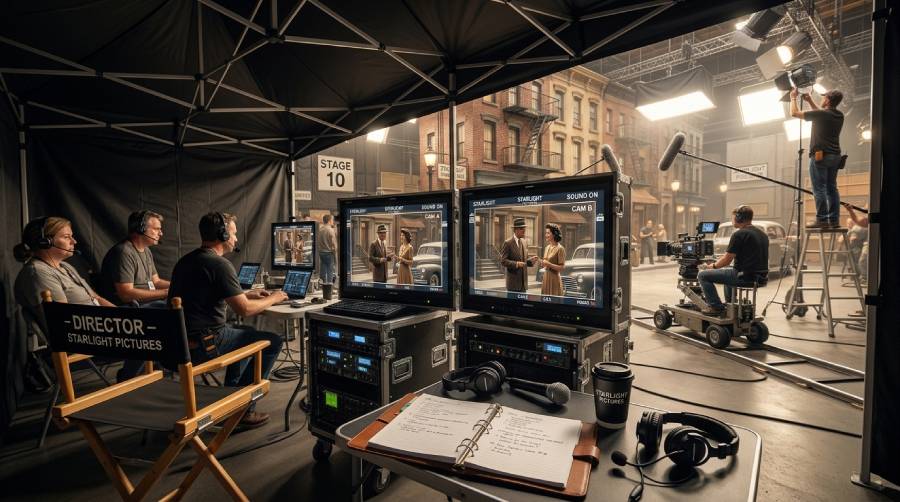
Identification badges are one of the most common ways to identify individuals within a production environment. Badges assist security personnel and production team members in identifying employees, cast members, contract labor, press/journalists, and visitors.
Credentials can contain a person’s name, image, department, position, and/or authorization categories. The use of various colors/visual cues allows for rapid identification of particular categories of people by employees.
Lanyards and badge holders allow employees to easily show and view their credentials throughout the entire workday. Production coordinators, for example, can utilize visible identification systems to differentiate between employees and short-term visitors when they have a large number of people on set at one time.
Companies like 4inlanyards produce practical accessories for identification in environments that have a lot going on (conferences, festivals, organized productions) such as custom lanyards, event badges, card holders, and badge reels.
The distinction between visual identification and absolute security approval must be made. A badge will assist in establishing identity or identifying a given classification; however, access to certain areas within a facility may still require other forms of authentication.
Electronic Access Cards and Security Systems
In today’s world of technology, many modern studios utilize digital credentials such as electronic access cards, keycards, etc., to control who can enter certain areas of their facilities.
These types of administrative systems are designed to provide access to users based upon their job functions. An administrator could grant permission for a video editor to utilize post-production facilities, while a visitor would only be able to enter the facility through the front door.
Electronic systems can record entry logs which help to provide an understanding of who entered certain areas and at what time. Employees’ access permissions may be altered or removed depending on whether they have changed jobs within the organization or left the job entirely.
Security Personnel and Checkpoints
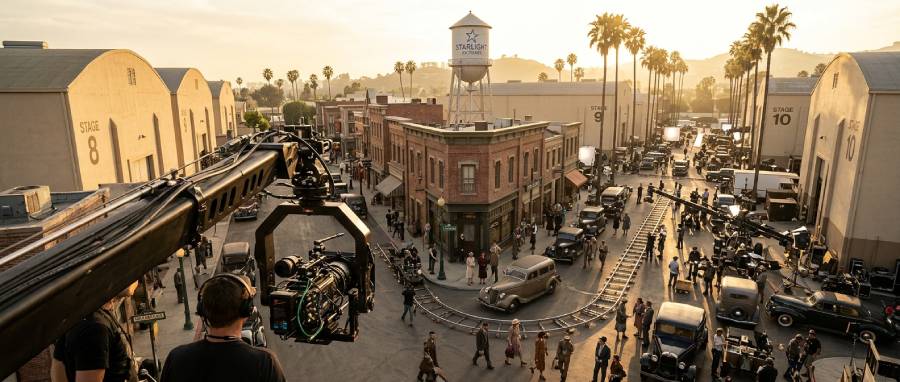
Technology cannot solve every security problem. There is still a need for trained security professionals at entrance points of studios, production sites, and entertainment venues.
Security staff checks credentials, confirms visitors’ identity, watches all entrances, and takes care of surprises. In addition to directing visitors to safe zones, security officers will keep things orderly during high-volume production times.
Human supervision is especially helpful when there are last-minute changes to guests attending your event, you hire temporary help, or someone needs to gain access to your facility on short notice.
Visitor Registration and Temporary Passes
Film studios frequently host suppliers, interviewers, journalists, maintenance workers, and many other types of visitors. The studio uses a formal registration process to monitor the arrival of these guests.
When you come to the facility, you may be required to show an ID, tell us why you’re here and who you’re seeing. At this point, you will receive a temporary credential that has specific areas that you are allowed to enter.
Some facilities require that all visitors be accompanied by an authorized employee at all times. All temporary passes issued during the visitor’s stay must be collected or deactivated upon completion of the visitor’s stay.
How Access Control Works During Entertainment Production Events
Access control is especially crucial when it comes to film festivals, movie premieres, award shows, and screening events for the entertainment business.
In contrast to permanent studios, these events take place at a variety of locations with multiple entry points. At the event, organizers will create distinct areas for all types of participants (general admission, VIPs, reporters, photographers, performers, and event personnel).
The verification of an individual’s registration details takes place prior to the provision of the correct credentials. After this has occurred, security staff will inspect these credentials prior to entering a restricted area.
As an example, if a photographer attends a movie premiere, he/she may have access to the special media area of the venue; however, they will not be allowed to enter the backstage prep area. In addition, as an example, if a festival volunteer is allowed to work at the front desk of the venue, they will not be able to access the private screening facilities.
Organizers can keep things organized by having clear access categories that allow for many different types of people to attend an event.
The Role of Technology in Modern Production Security
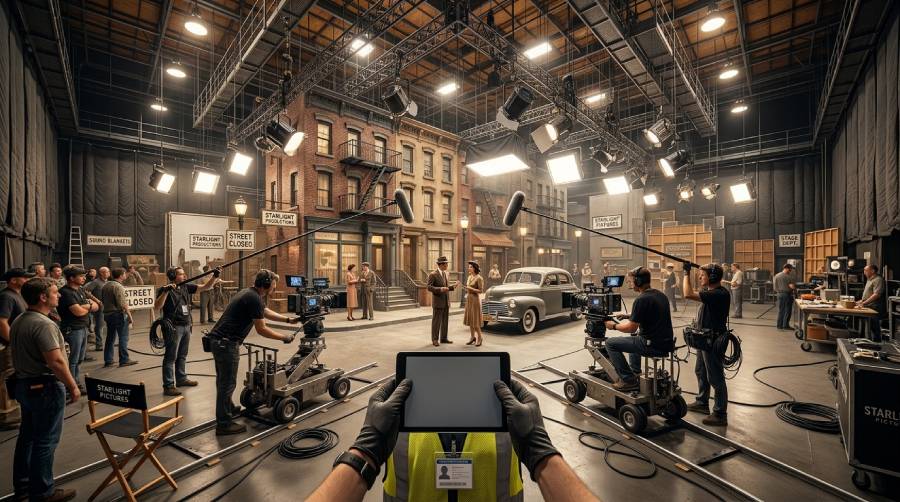
The way entertainment companies handle access is being altered by digital technologies.
Attendees will be able to check in much faster at an event because of digital registration platforms and QR-code credentials. These tools will enable event staff to quickly confirm each attendee’s registration status. Many of the available systems also provide real-time updates, which makes it simple for event planners to make last-minute changes.
Electronic guest tracking systems may assist with recording entries into events, tracking attendance data for those attending, as well as assisting event planners to recognize issues.
Technology has its limitations. For example, digital systems can fail technically, people can share credentials, and registration information can go out of date. Therefore, a more dependable method of verification includes the use of electronic verification along with visually verifiable identification and qualified security staff.
Challenges of Managing Access on Film Sets and at Large Events
Even in well-run production environments, there are always going to be issues with managing access.
In the world of entertainment, there will always be last-minute changes. For example, a new contractor can show up on the job site; a reporter can get permission to go somewhere they were not allowed before; or a crew member can be granted access to another department for a short period of time.
Large crowds also present additional challenges, especially at premieres and festivals. Large registration lines, missing badges, and confusing entry procedures may make it more difficult for event organizers to operate smoothly.
Another issue is credential sharing. Someone may try to enter a restricted area using someone else’s credentials. This can be prevented by regularly verifying credentials and establishing clear guidelines for entry into the area.
Production teams are required to strike a balance between providing adequate protection and allowing ease of access. Too much complexity in the process of entering the site may cause interruptions to production schedules as well as frustration among those who have been granted authorization.
Best Practices for Effective Access Management
An effective plan for access control starts by having clear roles and permissions established. Before beginning production or registration, both the studio and event organizer need to determine which individuals have permission to enter each section of the location.
Other useful practices include:
Assigning the proper level of access to each employee, contractor, guest, and media representative.
● Using recognizable identification credentials that are easy to inspect.
● Training reception teams and security personnel to verify authorization.
● Maintaining accurate visitor records and updating access lists regularly.
● Collecting temporary passes when visitors leave.
● Reviewing security procedures and preparing emergency access arrangements.
The use of these types of standards will provide uniformity throughout all of the various production departments and event locations.
Final Thoughts
Access Control is critical in today’s environment for managing Film Studios and Entertainment Production Events. Whether you are protecting costly equipment and/or confidential material or managing media access for Movie Premieres, proper security procedures provide a safe and efficient operation.
Production teams are able to have control over their environment by utilizing identification badges, electronic entry systems, visitor registration, and trained security personnel in a coordinated effort. The combination of all of these security measures will allow production teams to create controlled environments while still allowing creative activities to occur.
As entertainment production and live events become more complex and larger, we should expect to see continued focus on access management as a critical component to provide a smooth, safe, and successful event experience.