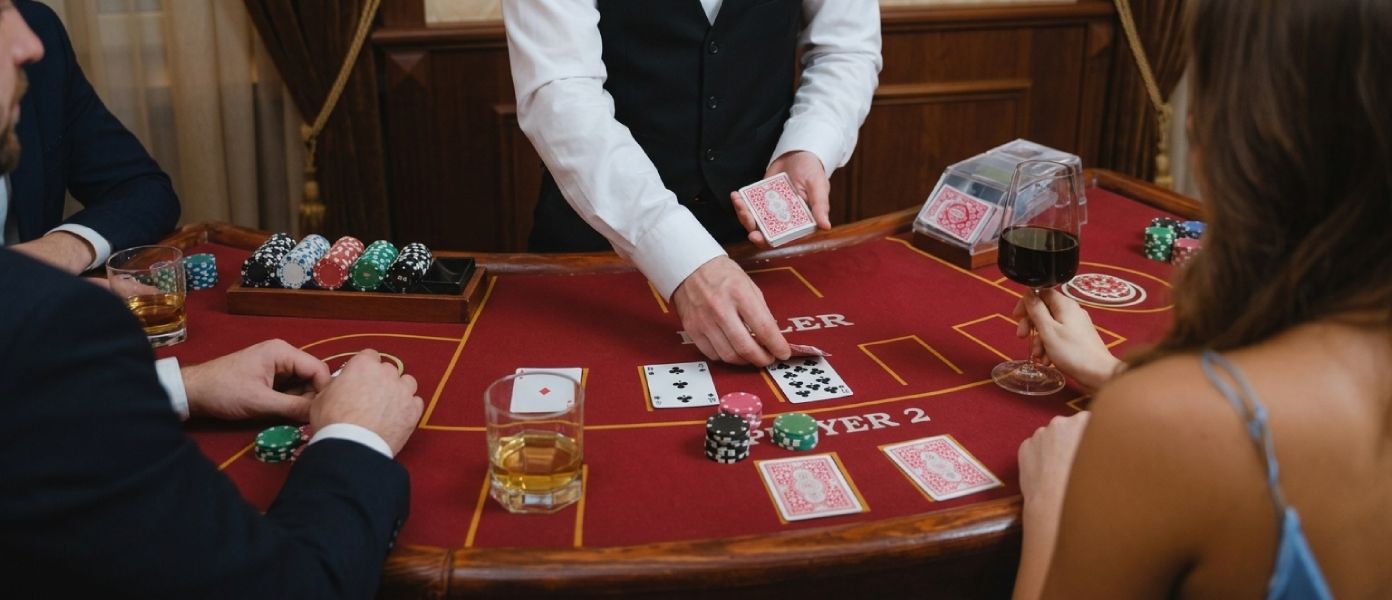
A blackjack table gives filmmakers a compact stage, a visible set of rules, and several people trying very hard not to reveal what they’re thinking. Used well, the game can expose confidence, impatience and self-control before a character has even finished arranging their chips.
Cinema loves card tables in smoky, dimly lit rooms, though the cards themselves aren’t usually the whole point. Directors use them to confine characters who would rather pace, run, or throw something across the room. Everyone has to sit still while money, pride, or information exchanges hands and tension is through the roof. A glance at the dealer can carry far more weight than a page of dialogue ever could.
One Decision Can Sketch an Entire Personality
When a character takes another card on 16, the director gains a revealing action. The decision can suggest that there’s calculation, recklessness, desperation, or ignorance, depending on the performance and what the scene has established. Standing can look disciplined in one film and frightened in another, depending entirely on a character’s persona.
You may leave a movie curious about the mechanics behind the scene. For someone in Ireland, for example, NetBet’s blackjack games offer classic, multi-hand, and live formats built around that familiar choice: take another card or stop. The variations change presentation and table rules, but filmmakers usually return to the clearest version because the audience has to read the decision.
In “Rain Man,” blackjack works beautifully because Raymond’s exceptional ability with numbers collides with Charlie’s willingness to exploit it. The table reveals both men at once. Raymond processes cards with precision; Charlie sees a route out of financial trouble. Their reasons for being there give the sequence its unease.
The Camera Watches Everything Except the Cards
A weaker card scene keeps showing the hand, as though the audience might forget which game is being played. A stronger one watches each character’s face, fingers, and breathing for extra emphasis. The cards supply the structure while the actors provide the event.
Editing controls how much you know during the scene, as a wide shot can establish who is watching whom. A close-up can isolate a tapping finger or a bet pushed forward too quickly. Cutting to the dealer delays the result by another second, which is often enough to tighten the scene without swelling the soundtrack.
Sound is just as important. Chips have a crisp, unmistakable clatter. Cards scrape against felt. A busy room can fall away when the hand reaches its final decision.
The same restraint explains why the card sequence in “Casino Royale” is so memorable, despite being poker rather than blackjack. Daniel Craig’s Bond is studied as much through posture and reaction as through dialogue. Reviews of No Time to Die also trace how that guarded characterization carried across Craig’s tenure.
Accuracy Helps Even When Reality Gets Trimmed
Film blackjack doesn’t need to unfold at the speed of an ordinary game session. Real hands can include pauses, routine decisions, and procedural details that add little to a two-hour feature. Compressing them is reasonable. Breaking the underlying logic without explanation is far harder to ignore.
Small errors can weaken a supposedly expert character. Rules vary between tables, but the screenplay should know which version it is using. The number of decks, whether the dealer hits a soft 17, and the payout for a natural blackjack can affect decisions. The UK Gambling Commission requires remote games to make rules and information about winning likelihood accessible, which is a useful reminder that presentation should never replace clarity.
Card counting is another frequent shortcut used in cinematic moments. Films often portray it as instant arithmetic performed by a near-superhuman mind. In practice, it involves tracking the changing composition of a physical deck or shoe. It doesn’t predict the next card and isn’t relevant to independently generated digital hands.
Losing Often Reveals More Than Winning
Winning can confirm what the film has already told you: the hero is skilled, the plan worked, and the rival underestimated them. A loss creates more room for character development. You see whether the character accepts the result, blames someone else, chases the money, or notices the opponent has revealed something valuable.
That reaction can redirect the entire plot. A composed player might leave the table with less cash but better information. An impulsive one can turn a manageable setback into the decision that brings everything down. The game supplies an outcome; the response supplies character.
Blackjack scenes work best when filmmakers trust the audience to follow a handful of visual facts. We know the total, the available choices, and what the character stands to lose. From there, a pause before “hit” or “stand” can tell us whether we’re watching a strategist, a show-off, or somebody whose confidence has finally outrun their better judgment.