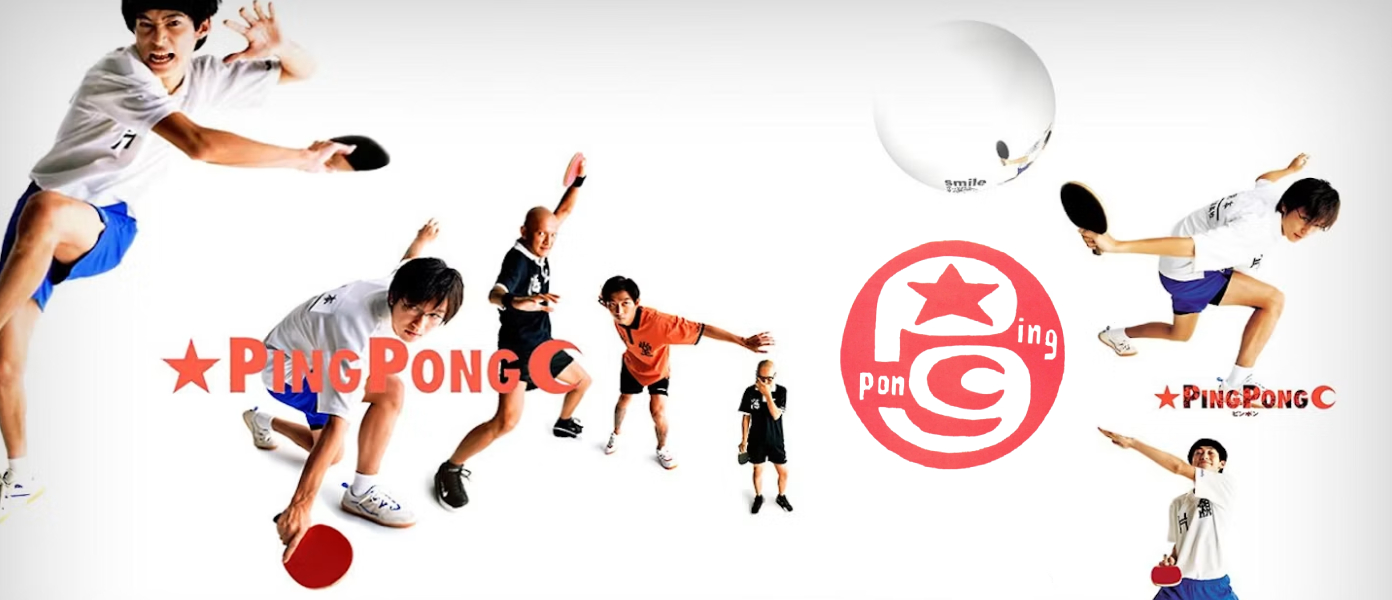

“Ping Pong” follows high school best friends and table tennis players: the brash, arrogant “Peco” and the quiet, apathetic “Smile”. As intense regional tournaments approach, formidable rivals test their lifelong bond and opposing philosophies on the sport.
Based on a manga by Taiyō Matsumoto, director Fumihiko Sori’s “Ping Pong” follows longtime friends and ping-pong enthusiasts Peco (Yōsuke Kubozuka) and Smile (Arata), who have wildly different personalities. Peco, overly animated and driven, longs to be the best (and most famous) ping-pong player while Smile, ironically nicknamed for his lack of emotion, plays to fill the time. Kubozuka gives Peco manic energy while Arata commits to Smile’s complete lack of outward emotion.
Their high school team is coached by Butterfly Joe (Naoto Takenaka), a former hotshot in the sport. Although Peco initially seems to be the player to beat, Joe focuses his attention on Smile. Joe realizes that Smile is so adept at the game that he deliberately plays down to his opponent’s skill level, something Joe finds frustrating and Peco doesn’t notice. After disappointing results at a tournament, the film chronicles a year with the two teens as they struggle with their disappointment and prepare for the next competition.
Despite Sori’s skillful blend of CG effects and the cast’s committed performances, “Ping Pong” wasn’t a film that won me over. Peco is a grating character, a sore winner and an equally abysmal loser. Smile, meanwhile, is deliberately wooden and emotionally withdrawn. Neither character offered me much to latch onto — one is flat-out unlikable, and the other is purposefully difficult to engage with. Their relationship never made me particularly invested in seeing either character succeed as the film entered the final tournament.
The pacing also frequently feels off. Sori inserts flashbacks early in the film. These moments, clearly meant to connect the audience with the leads, are initially more confusing than illuminating. We haven’t spent enough time with these characters to determine who is who in these flashbacks, which starts the film off on the wrong foot. The ping-pong matches themselves aren’t particularly engaging and, like most sports movies, “Ping Pong” spends too much of its finale focused on the matches. The buildup to the final tournament didn’t work for me, leaving the conclusion without much payoff.
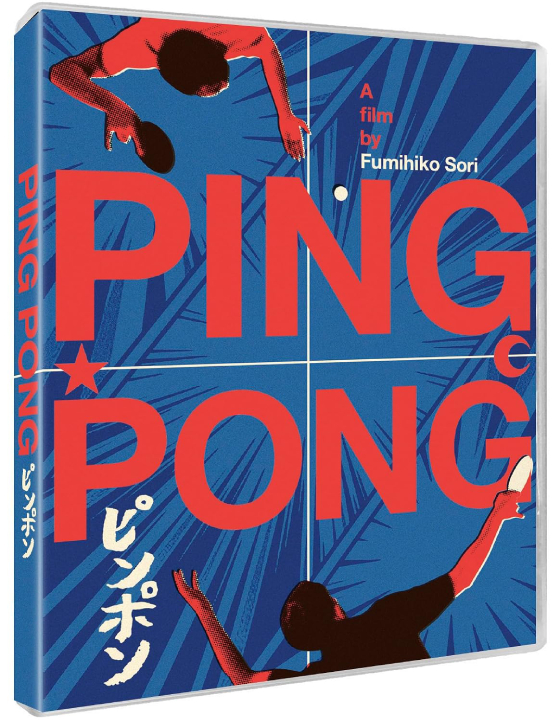
“Ping Pong” is released by 88 Films as a limited edition Blu-ray™ Disc. The transfer looks mostly decent, though the film’s appearance is limited by its early digital photography. The film was shot using the Sony HDW-F900, an early high-definition digital camera introduced in 2000. I noticed frequent aliasing in fine details and along edges, an attribute I found distracting. Other viewers may not be bothered by this as much, if they notice it at all. The disc offers 5.1 and 2.0 lossless audio options. I opted for the 2.0 track, which presented the music and dialogue cleanly and clearly.
Extras include an audio commentary by Zack Davisson, an interview with filmmaker Michael Arias discussing Taiyō Matsumoto and “Ping Pong,” a video essay by Jasper Sharp, and the film’s original trailer. Sharp’s video essay is an interesting piece, offering insight into the feature and leaving me wondering if I missed something. Arias also speaks highly of the film and Matsumoto’s work, though I found his interview a little long. The limited edition also includes a booklet with an essay by Jonathan Clements.
Longtime fans will likely appreciate having the film on Blu-ray™, though newcomers may want to approach with more caution.
Now available on Blu-ray™ and DVD from 88 FILMS
 10k
10k 20k
20k 1.5k
1.5k 2.2k
2.2k