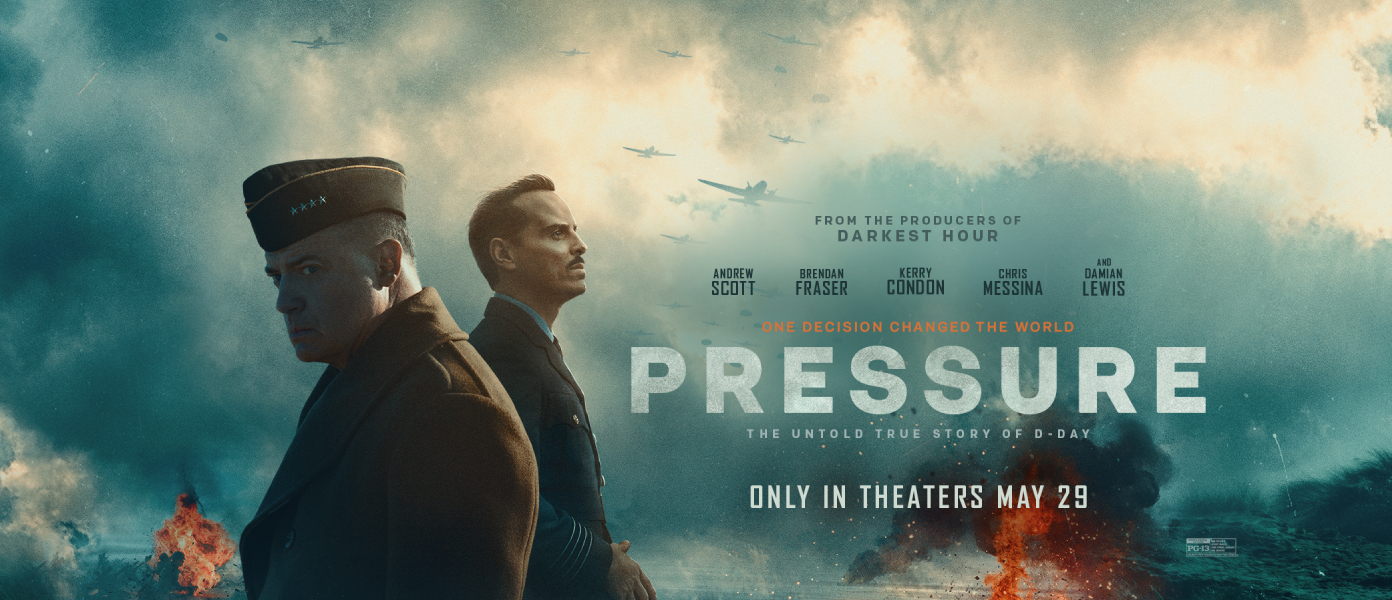

In the tense 72 hours before D-Day, General Dwight D. Eisenhower and Captain James Stagg face an impossible choice–launch the most dangerous seaborne invasion in history or risk losing the war altogether.
Anthony Maras’ “Pressure” is a war film almost entirely devoid of the bombast that typically defines the genre. Instead of taking place entirely on the battlefield, Maras delivers something far more unnerving: a tense, intelligent procedural about weather forecasts, probability, and the unbearable pressure of knowing that a wrong prediction could doom hundreds of thousands of men. The result is one of the year’s most restrained and gripping historical dramas.
The theatrical roots of this film are evident in the blocking and in the use of a single main setting, Southwick House, with various upgrades for the cinematic medium, namely, a handful of shots of the massive Allied war effort in the Atlantic.
This film takes place not only in the tense 72-hour period before D-Day, but also in the weeks following the catastrophic Exercise Tiger, where hundreds of Allied servicemen perished in friendly fire thanks to poor coordination, as well as fire from German E-Boats. There are no mincing words with the severity of the stakes surrounding this forecast—it’s by far the most important in the history of warfare.
If there is one word I could use to describe this film, it would be: tasteful. From the 100-minute runtime to the measured performances, the script and the restraint in application of big-budget war scenes—it’s all in service of the subject matter: a different perspective of the Great War that audiences don’t often see.
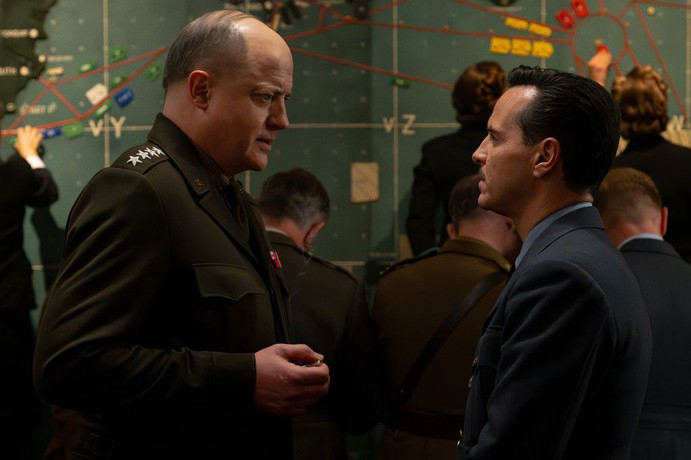
Andrew Scott, as Scottish meteorologist James Stagg, anchors the film with this career-best performance. Brendan Fraser as General Eisenhower brings an enormous emotional intensity, serving to iterate and reiterate the stakes at hand.
Irving Krick, played by Chris Messina (who’s always good playing an arrogant blowhard), is the American meteorologist whose forecasts in the African theatre were never wrong. Thankfully, Eisenhower had the presence of mind to bring in a meteorologist who understood that Northern Europe is a more dynamic weather system than the desert climate of Africa. This is the central conflict of the story: Stagg predicts Monday, June 5, 1944, will be too rainy to be safe enough for the 300,000 troops to land on the beaches of France. Krick and other officials question his credibility and motives.
Stagg’s intellectual humility is an admirable trait, reminding me of Dr. Grace’s in Project Hail Mary. He’s smart enough to know what he does not know or can’t know. Stagg repeatedly insists that one cannot be certain with something as dynamic as the weather, especially 72 hours beforehand. This is, after all, over 80 years ago, before Doppler radar and countless weather satellites.
“Pressure” is the perfect title for the scope of this film’s story—when history had not yet become history, and victory was far from guaranteed. That perspective makes the film feel startlingly fresh. It’s a war movie about uncertainty, ego, science, and responsibility. More importantly, it’s a reminder that sometimes the most heroic act is admitting what you do not know.
In Theaters Friday, May 29th
 10k
10k 20k
20k 1.5k
1.5k 2.2k
2.2k