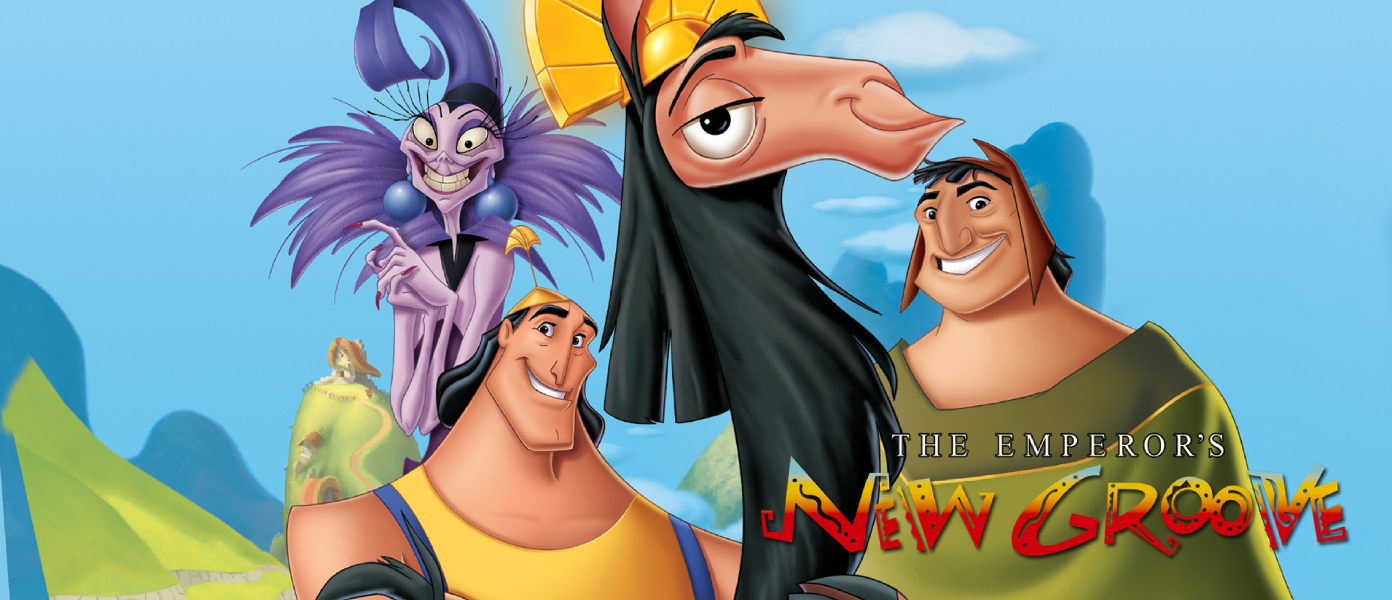

Emperor Kuzco is turned into a llama by his ex-administrator Yzma, and must now regain his throne and his human form with the help of Pacha, a gentle llama herder.
“The Emperor’s New Groove,” released in 2000, remains one of the few animated films that should not be remade or rebooted. Initially titled “Emperor in the Sun,” the film was set to follow a selfish emperor who switched places with a peasant look-alike, originally intended to be voiced by Owen Wilson. The plot involved the villain, Yzma, who planned to summon a dark spirit to block out the sun and prevent her own aging. This concept was abandoned after the disappointing box-office results of “Pocahontas” and “The Hunchback of Notre Dame,” leading the studio to bring in Mark Dindal to rework the film as a comedy.
Upon its release, it received generally positive reviews from critics and audiences, but underperformed at the box office compared to Disney films released in the 1990s (a period known as the Disney Renaissance), and has grossed $169.5 million on a $100-million budget. In addition, it also received an Oscar nomination for Best Original Song for “My Funny Friend and Me.” Despite the box-office flop, the film was later turned into a franchise, with a direct-to-video sequel, “Kronk’s New Groove,” released in 2005, and a television series called “The Emperor’s New School,” released from 2006 to 2008 on Disney Channel. There was also a documentary film called “The Sweatbox” (2002), which details the production troubles that “The Emperor’s New Groove” endured during its years of development.
Directed by Mark Dindal, the film follows Emperor Kuzco (David Spade), a selfish ruler of the Inca Empire. After dismissing his adviser, Yzma (Eartha Kitt), she and her assistant Kronk (Patrick Warburton, who recently appeared in “Zootopia 2”) plot to kill Kuzco with a poison drink. During dinner, the potion is accidentally switched with a llama extract, transforming Kuzco into a llama. Yzma instructs Kronk to dispose of him outside the city, but Kuzco ends up in the care of Pacha (John Goodman), a peasant from a nearby village. Together, despite their differences, they must cooperate to restore Kuzco’s human form and reclaim his throne.
The voice acting cast fits the bill. The story is well-told, and the characters are well-voiced. The dialogue is humorous and clever. The characters are filled with glee as they jump off the screen. They are also lively even without the dim colours or the extra dimension. But what is enjoyable is the animation, the story, and the wholesomeness of these characters. Ever since the dawn of CGI-animated films (like Pixar’s “Toy Story”), hand-drawn animation has become obsolete. Disney’s hand-drawn animated features, produced in the early 2000s, bombed at the box office, leading to Michael Eisner’s ousting as CEO of the studio in 2005. The animation for this film is a successful hybrid, perfectly blending the simplicity of animation with digitised colour enhancement. Not to mention John Debney’s score is abundant and vibrant.
Surprisingly, this film is 25 years old. Yet, it is one of the most meme-orable animated films in Disney history. Lots of memes and catchy lines have been displayed throughout the film, thanks to Mark Dindal’s brilliant direction, clever dialogue, and the atmosphere the filmmakers, actors, and animators created. Whether it’s a good (or okay) movie, it is actually really great, if not better. It allowed us to revisit and rediscover the good old classics, and it’s the kind of animated feature Disney should strive for, despite the rise of CGI animation and the vulnerability of its competition with Pixar and DreamWorks. Not only is “The Emperor’s New Groove” an animated masterpiece, but it’s also comical slapstick. It functions inside such a rare formula. It needs to be seen and passed down for many generations. It is elegantly voice-acted, expertly animated, and it is nothing but a remarkable picture.
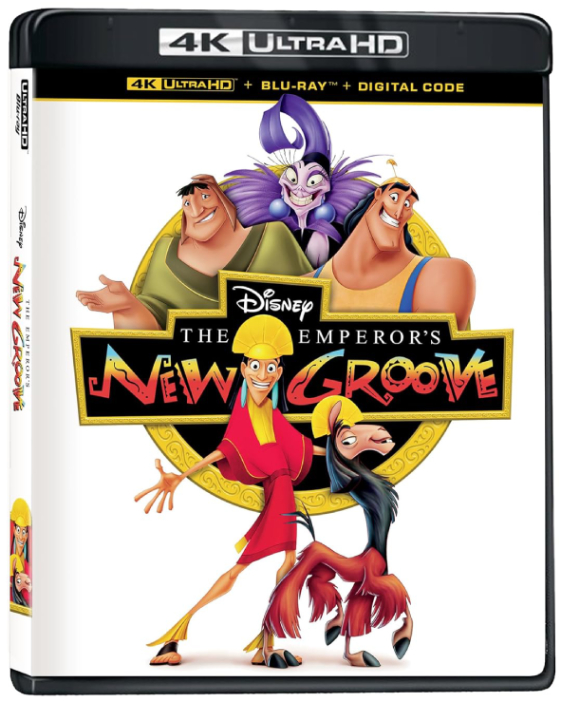
Now available on 4K Ultra HD™, Blu-ray™, DVD, and Digital
 10k
10k 20k
20k 1.5k
1.5k 2.2k
2.2k