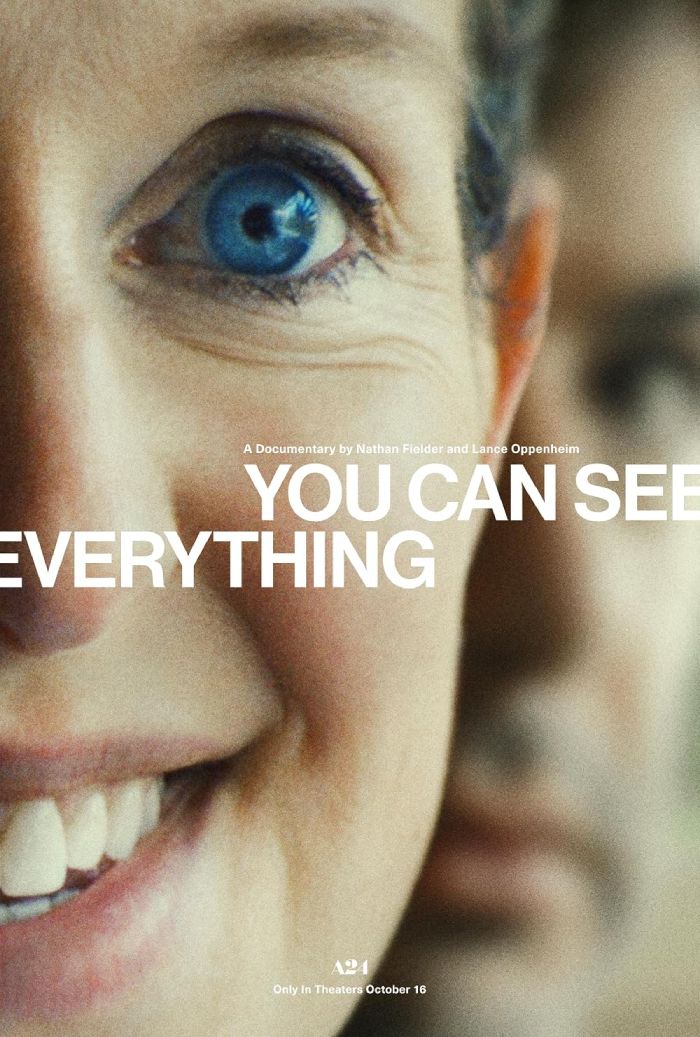

Thirty-four days before she’s sent to prison, notorious Theranos founder Elizabeth Holmes invites a skeptical film crew to document her every move. What begins as an intimate portrait becomes a mind-bending three-year journey.
For those unfamiliar with the story, “You Can See Everything” is a documentary co-directed by Nathan Fielder and Lance Oppenheim that follows Elizabeth Holmes, the disgraced Theranos founder convicted of defrauding investors, during the 34 days leading up to her reporting to prison. Holmes invites a skeptical film crew into her life, alongside her partner, Billy Evans, in what initially seems like an intimate portrait of a woman preparing to face the consequences of her actions. But if you know anything about Nathan Fielder, you can probably guess things won’t be that straightforward.
You Can See Everything is one of the most unreal pieces of documentary filmmaking I’ve had the pleasure of witnessing. This movie had my brain doing mental gymnastics pretty much every time Nathan, Elizabeth, Billy, and the other people I really don’t want to spoil opened their mouths. I was constantly studying everyone’s perspectives, questioning their motives, and trying to piece together what was actually happening.
I’m genuinely glad I went into this knowing as little as I did. Having missed most of the Elizabeth Holmes story as it unfolded and living in an era where trailers, marketing campaigns, and social media discourse can practically tell you an entire movie before you sit down, I find it refreshing to experience a film that actively resists being explained ahead of time. I approached this almost like a juror, wanting to hear every perspective before deciding what I believed. I’m really glad I saw it on opening night without knowing where it was headed.
What’s almost as fascinating as the movie itself is how it arrived. Developed largely in secret over several years, the film made its surprise debut at Telluride in an unannounced screening that kept audiences completely in the dark about what they were about to see. The secrecy surrounding the project feels especially fitting for a movie that constantly asks you to question everything in front of you.
As I watched this unbelievable work unfold, I kept thinking about Fielder’s narration from the Season 2 premiere of “The Rehearsal”: “Don’t get me wrong, I love being a comedian. But when you lead a life dedicated to making others laugh, in those rare moments when you want to be taken seriously, it can be difficult to overcome the deficit of credibility that you’ve created for yourself.” That idea hangs over the entire movie in a way you can’t ignore.
A big part of what makes this feel so connected to “The Rehearsal” is hard to discuss without spoiling it, so I won’t get into specifics. What I will say is that this isn’t a straightforward documentary about Holmes and her husband or a simple retelling of her downfall. It’s a layered exploration of the narratives people construct and the lengths they’ll go to protect them when years of baggage and negative press threaten to define who they are.
What’s fascinating is how easily someone can convince people to believe either a massive lie or a slightly altered version of the truth. Elizabeth Holmes is either one of the smartest people on earth or one of the most deeply unaware, and I genuinely struggled to figure out which throughout the entire film.
Nathan Fielder is a one-of-a-kind filmmaker, and I honestly think he’s one of the greatest sociologists of modern times. Nobody else could have made this movie quite like this. Everything he’s done up to this point feels like it’s been leading here, and I think this is one of the most fascinating explorations of a public figure I’ve ever seen.
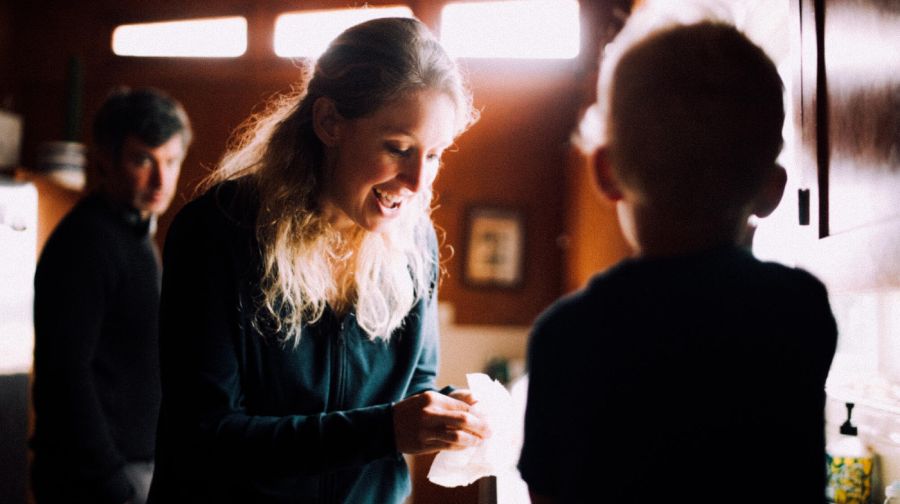
The version of Fielder we’ve seen across his work has rarely been as confrontational or somber as he is throughout You Can See Everything. I think that shift also owes something to Lance Oppenheim’s presence behind the camera, which, alongside Fielder’s trademark humor and deadpan delivery, makes itself felt.
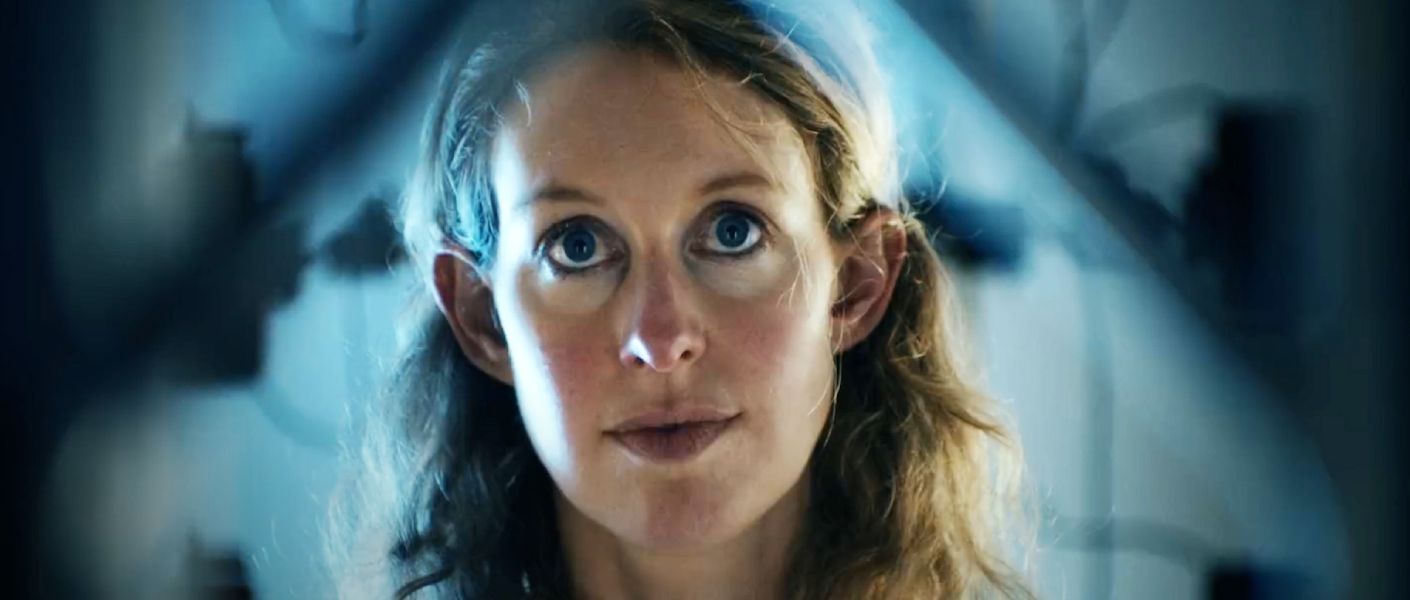
The combination of Oppenheim’s documentary instincts and Fielder’s creative intellect being applied to Elizabeth Holmes is genuinely unbelievable. I’m still not entirely convinced this movie exists. The visuals feel raw and immediate, with extreme close-ups that let you sink into people’s eyes and study every expression. Every glance and every word feels like another clue, turning you into a detective trying to figure out who’s actually telling the truth. It’s visually immaculate, unlike anything else I’ve seen this year.
Billy Evans is one of the most fascinating people in the movie, and not in a good way. The film presents him as deeply manipulative and calculating, and I found myself studying his behavior almost as much as Holmes’. At the same time, it’s clear that Elizabeth isn’t simply acting under someone else’s influence. She’s an active participant in her own story, which makes it hard to place all the blame in one place.
What sets this apart from a traditional documentary is how thoroughly it subverts your expectations. You might think you’re getting a retelling of the Elizabeth Holmes story covering the weeks before she reports to prison, and that’s it. But the second half heads into territory that only Nathan Fielder could explore. If you’re familiar with “The Rehearsal,” you’ll recognize echoes of it in how he interrogates media narratives, public perception, and what actually makes someone who they are. By examining the aftermath of Holmes’ rise and fall, along with the various retellings of her story, including “The Dropout,” the film digs into how public figures become cultural obsessions and whether the truth is ever as straightforward as we’d like.
The audience I saw this with made the experience even better. In a nearly sold-out theater full of Nathan Fielder fans, this was easily one of the most reactive crowds I’ve experienced all year. The gasps and audible reactions to practically every line of dialogue mirrored exactly what I was feeling. It was hard not to cringe, laugh, gasp, and feel like we were all witnessing something extraordinary together.
What stuck with me most is that You Can See Everything never gives you the comfort of a clear answer. Every time I thought I had someone figured out, the movie made me question that assumption.
I walked in expecting a documentary about Elizabeth Holmes preparing for prison. I walked out feeling like I’d just watched a movie about perception itself. About the stories people tell the world, the stories they tell themselves, and how impossible it can be to know where one ends and the other begins.
Nathan Fielder and Lance Oppenheim have made something completely original. The morning after seeing it in a packed house, I’m still turning it over in my head, trying to figure out what to make of it. And I think that’s exactly the point.
In Theaters Friday, October 16th