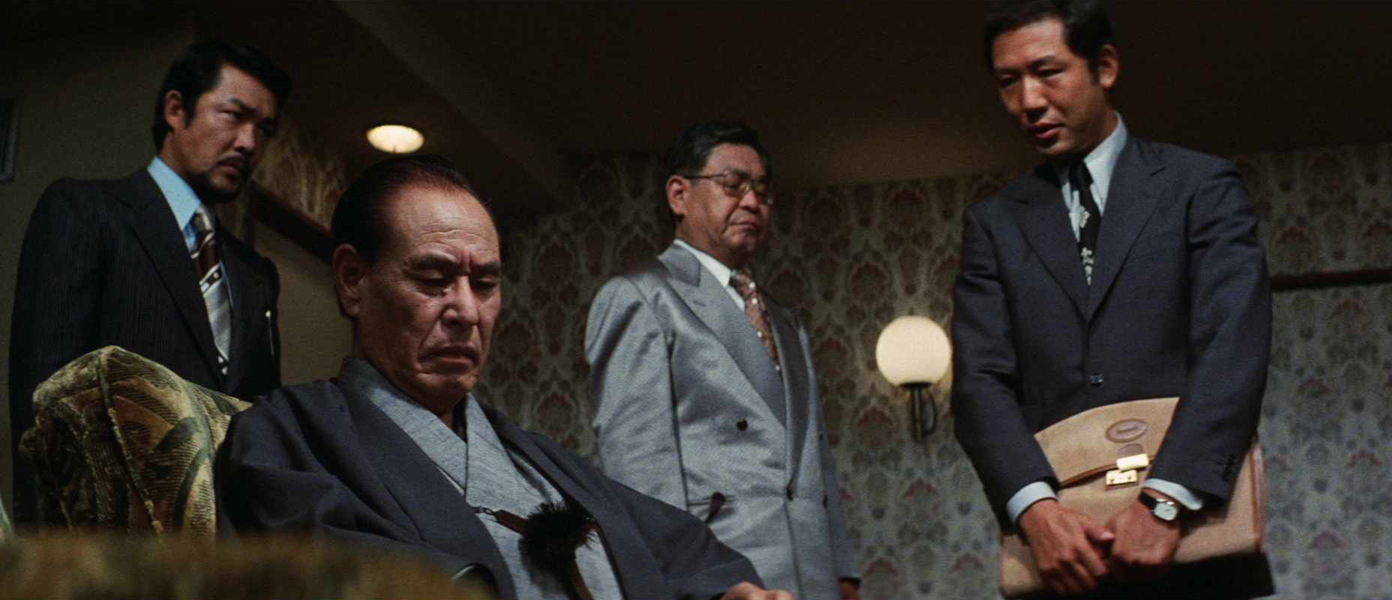

At the dawn of the 1970s, Japan was becoming an economic superpower, and the Nakajima crime syndicate extended its grasp across the nation. Politicians and corporations seek the gang’s favour to form strategic and highly prosperous partnerships, but its leaders disagree about whether to leave the old ways behind for the sake of money and respectability.
I went into “The Japanese Godfather Trilogy” mostly out of obligation and came away genuinely impressed, even if I’m not completely in love with it.
What really pulled me in was the aesthetic. These films are patient in a way that feels very specifically Japanese. The camera sits low in tatami rooms, letting conversations breathe. There are long pauses where no one speaks, and you can feel the tension in the way someone adjusts their posture or avoids eye contact. One early meeting between rival families plays out almost entirely through silence and small gestures, and it says more than a shouting match ever could. It’s restrained, but never dull.
Visually, this set from Radiance Films is gorgeous. On an OLED TV, it looks exceptionally good. The nighttime harbor scenes feature deep, inky blacks that still hold detail, and the candlelit funeral sequence, with smoke drifting through the frame, feels almost tangible. You can see the texture in the wood panels and fabric in a way that makes the whole thing feel tactile. It’s one of those discs that makes you glad you upgraded your TV.
Part 2 was easily my favorite. It shifts the focus away from big-power moves and toward the psychological weight of leadership. There’s a sequence where the new head of the family walks alone through a snowy shrine courtyard after making a decision he clearly hates, and the scene sits with him. No dramatic score swelling, no big speech. Just the sound of his footsteps in the snow. It’s simple, but it lands. There’s also a tense internal confrontation later on that feels more uncomfortable than any of the more outwardly violent moments in the trilogy. That inward focus made it hit me harder.
The first film is solid and sets everything up well, but it feels more straightforward. The third works as a conclusion, though it doesn’t quite reach the emotional clarity of the second. At times, the pacing drifts, and there were stretches where I admired the framing more than I was fully locked into the story.
Still, I respect what this trilogy is doing. It’s elegant, visually stunning, and committed to its tone. I may not love every minute of it, but it left an impression.

Bonus Features:
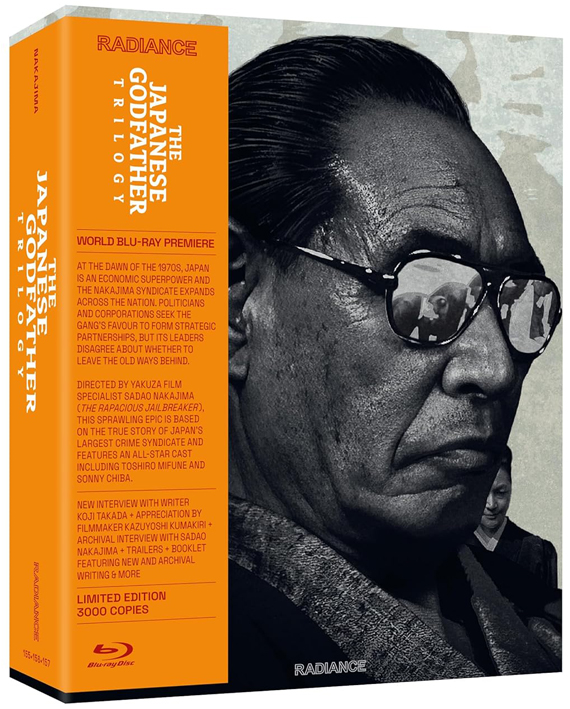
- High-Definition digital transfers of each film on three discs, on Blu-ray for the first time ever
- Uncompressed mono PCM audio
- Archival interview with Sadao Nakajima (2020)
- Newly filmed appreciation by filmmaker Kazuyoshi Kumakiri (2025)
- New interview with scriptwriter Koji Takada (2025)
- Trailers
- Newly improved English subtitle translations
- Reversible sleeves featuring artwork based on original promotional materials
- Limited edition booklet featuring new writing by Akihiko Ito and Tom Mes
- Limited Edition of 3000 copies, presented in a rigid box with full-height Scanavo cases and removable OBI strip, leaving packaging free of certificates and markings
Now available on Limited Edition Blu-ray™
 10k
10k 20k
20k 1.5k
1.5k 2.2k
2.2k