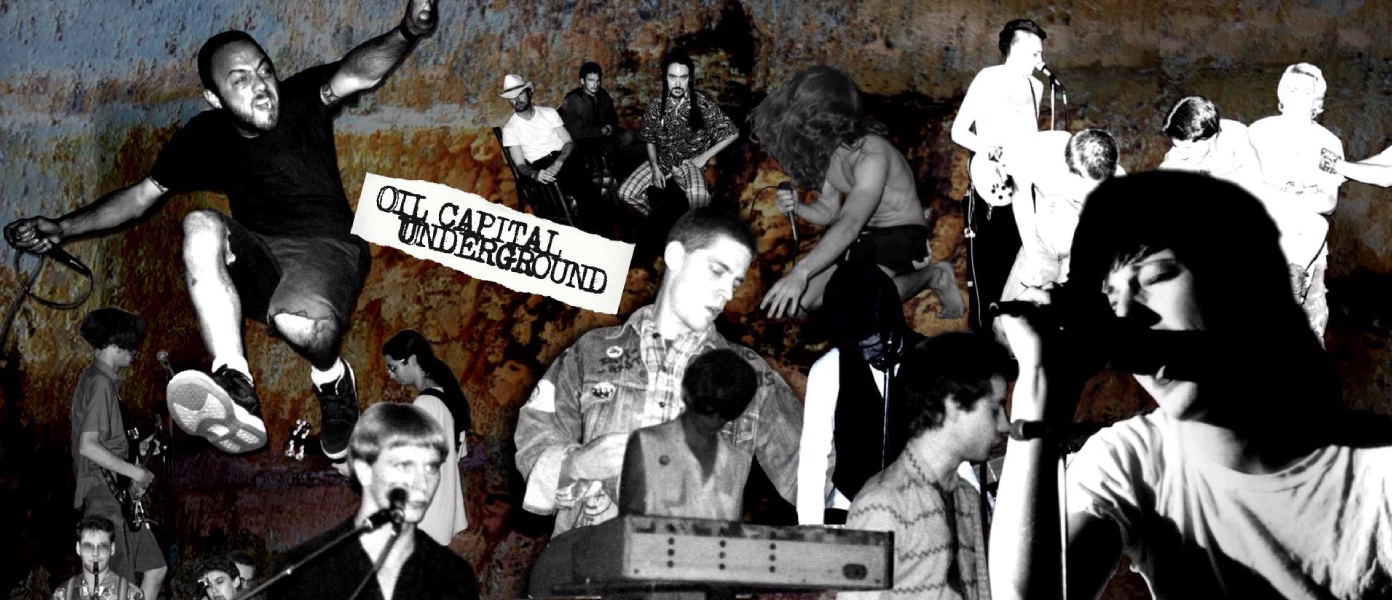

“Oil Capital Underground” is a documentary about the underground punk/new wave/thrash scene in Tulsa, Oklahoma, from the late 70s to the mid-90s.
While punk rock originated in the underground music scenes of New York City and London in the mid-1970s, it found a beachhead in the unlikely setting of Tulsa, Oklahoma. The documentary “Oil Capital Underground: The Genesis & Evolution of Punk Rock in Tulsa-Late 70s to Mid 90s” offers a gritty, authentic take on a somewhat fleeting era, though its remnants remain today in various forms. Known alternatively as punk, new wave, and thrash metal, this nihilistic brand of throbbing and pulsating sound – since a lot of folks would be reluctant to call it music – serves as an unmistakable and unapologetic imprint of the time.
As the footage clearly demonstrates, punk rock was nothing if not a raw and angry backlash against the polished mainstream rock and roll of the 1970s, and more generally against whatever one might consider the establishment. While 1960s rock music had a decided edge, by the next decade one could argue that much of the genre had become a mix of syrupy-sweet ballads and overly refined, derivative pop tunes. The punk rock rebellion feels reminiscent of another music industry upheaval at the time – the other one led by Willie Nelson and Waylon Jennings against the anti-Nashville country system with its over-orchestrated studio productions. But that is another story for another day.
Downtown nightclubs in Tulsa such as Blue Grotto, Crystal Pistol, and Club Nitro figure prominently in the narrative, replete with its counter-culture characters happy to regale the cameras with memories of their colorful exploits back in the day. Relatively unknown bands such as NOTA (None Of The Above), Brother Inferior, Los Reactors, Pit Bulls on Crack, and Concept of Nonsense pepper the soundtrack like habanero, with the lead vocalists literally screaming lyrics to enthusiastic audiences. Tulsa remains an unlikely site for such an avant-garde style of music to gain traction, given its conservative heritage. Yet similar developments occurred in other cities, such as Austin in the nearby, otherwise largely red state of Texas, at venues like Club Foot on 4th Street in the 1980s. Despite punk rock’s general inaccessibility to most conventional audiences, its eventual transition to alternative rock led to breakout successes by bands such as Nirvana and Green Day. These 1990s groups drew heavily on earlier punk rock influences.
Written and directed by Bryan Crain, the film captures rare live footage, archival flyers, and photos interspersed with candid interviews with musicians and promoters not well known to most. These include George Anthony, David Cantrell, Mike Armstrong, and Joe Danger, among others. “Oil Capital Underground” offers a vivid look into a music scene that many people have either forgotten or never knew. The DIY element infused with the indefatigable approach of punk rockers – particularly well-suited to the small venues in which they appeared during its brief but white-hot tenure – is starkly and expertly encapsulated by Crain in this solid documentary.
Available on DVD September 22nd

 10k
10k 20k
20k 1.5k
1.5k 2.2k
2.2k