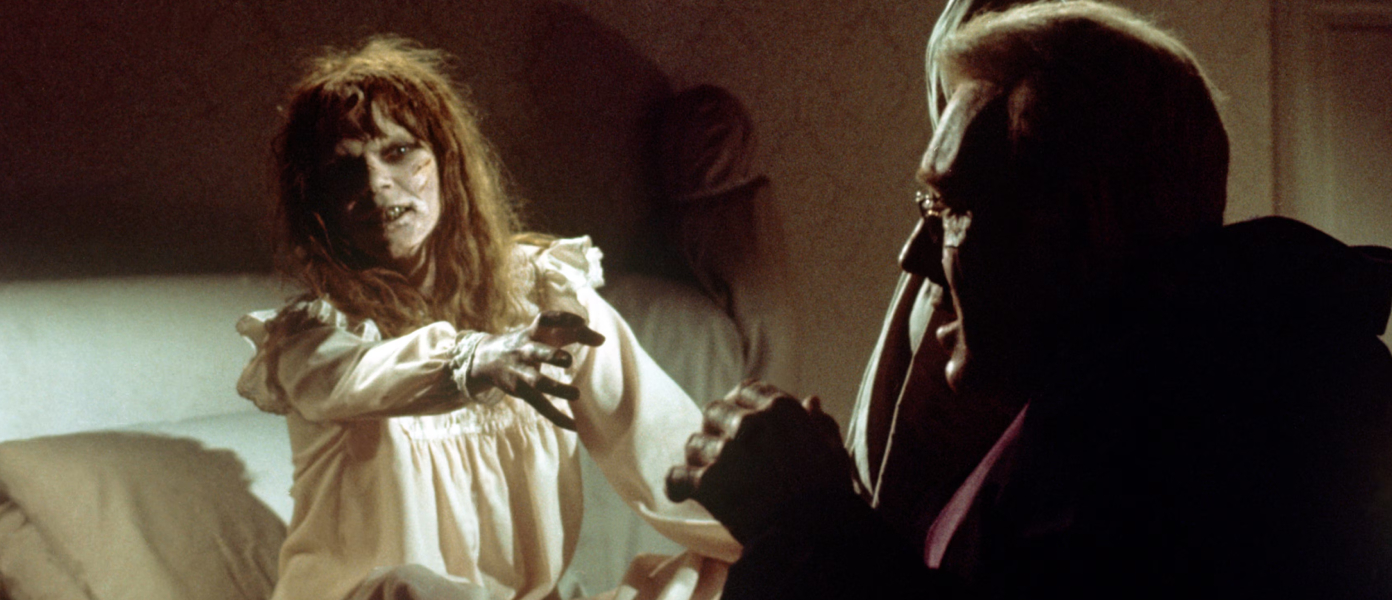

After directing “Point Blank” and “Deliverance,” John Boorman was offered to direct “Exorcist II: The Heretic.” The film became a massive failure, nearly ending his career. Years later, cast and filmmakers discuss its ambition and artistic value.
“Exorcist II: The Heretic” is considered by many to be one of the most baffling and disappointing sequels in cinema history. While the first film smashed box office records and had people literally fainting in the aisles because of the disturbing imagery it possessed (pun intended), its successor did no such thing. And therein lies the problem. While Friedkin’s original presented a movie about a young girl being possessed by a demon, its underlying themes dealt with the tension between faith and reason, pitting modern medicine against supernatural evil.
With “Exorcist II: The Heretic,” director John Boorman decided to go in a completely different direction. He wanted his film to challenge the original movie’s premise that evil and suffering are absolute. He found “The Exorcist” to be cynical, so he embarked on a journey to make a metaphysical, progressive film that proved “goodness won” and explored themes of transcendentalism and healing. While he set out with good intentions, the result fell short. On paper, it most certainly was far removed from the original, but at the end of the day, it all boiled down to what cinemagoers wanted, and they made their voices heard.
While the movie’s opening weekend set a record for the studio, Warner Bros., earning $6.7 million (remember, this was 1977), poor word of mouth dramatically hampered its performance, and its earnings quickly dropped off. Audiences laughed at the film, and many walked out. Director John Boorman took the blame and heavily re-edited the movie, from 117 to 102 minutes, and changed the ending, hoping the newer version would entice people back into theaters to give it another chance, but the damage had already been done. While some critics praised the shorter version, the changes did little to salvage the sequel’s reputation.
I remember watching the film many years ago, when I was a teenager, and the metaphysical and spiritual elements went right over my head. Like those who had seen it in theaters in 1977, I thought it was terrible. When I got the chance to review “Boorman and the Devil,” I decided to give “Exorcist II” another chance, and lo and behold, I actually enjoyed it. Even though it paled in comparison to almost every facet of the first movie, I watched it with the mindset of it being a standalone film, and it was more intriguing as a result. Even Boorman said that he felt Warner Bros. should have just called it “The Heretic,” but because it was technically a continuation of Regan’s story, and because the first movie was such a huge hit, they decided to alter the title and add “Exorcist II.”

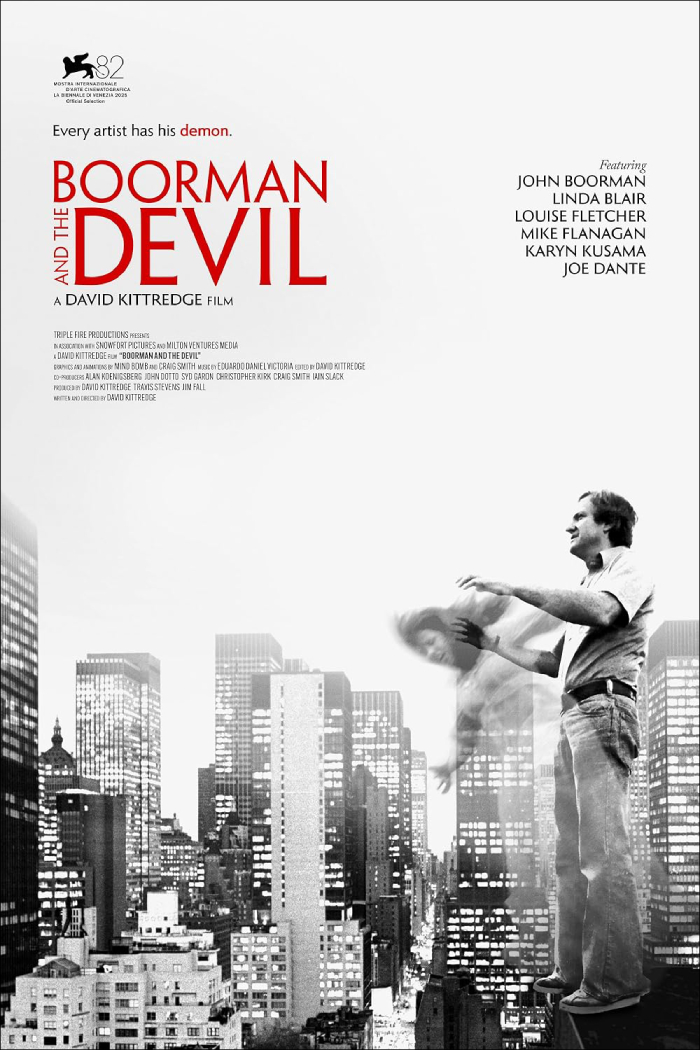
As an independent filmmaker myself for over 40 years, I love documentaries that show the making of a film. I always find it fascinating to see how other directors work, and “Boorman and the Devil” is no exception. Writer-director David Kittredge interviews many of the people who made the movie, including its director, John Boorman, as well as stars Linda Blair and the late Louise Fletcher. He also speaks with filmmakers Mike Flanagan (“Gerald’s Game,” “The Haunting of Hill House,” “Doctor Sleep”) and Joe Dante (“Piranha,” “The Howling,” “Gremlins”), as well as Garrett Brown, the man best known for creating the Steadicam, which was used to great effect in the film.
While there were rumors of a cursed and haunted set on “The Exorcist,” once filming got underway on part 2, things started well enough but quickly went downhill, fueling rumors that the sequel was also cursed. Not long after filming began, Boorman nearly died after contracting a severe illness caused by inhaling dust and sand from one of the movie’s special effects machines, causing the film to shut down for several weeks. Stars Louise Fletcher and Kitty Winn suffered gallbladder infections, and editor John Merritt quit the project mid-production. The entire production was plagued with seemingly never-ending issues, including frantic script rewrites to alter some of the heavy metaphysical themes that many of the actors did not understand, including the head brass at Warner Bros.
Linda Blair stated that she never wanted to do a sequel, even with the studio offering her a lot of money, and the only reason she changed her mind was that the producers cast Richard Burton in a starring role, prompting her to sign on quickly. Louise Fletcher, who had won an Oscar for her chilling performance as the antagonistic Nurse Ratched in the 1975 film “One Flew Over the Cuckoo’s Nest,” said she only did the movie because she had always wanted to do a big Hollywood production, and this was her opportunity. Filmmakers Mike Flanagan and Joe Dante give their input on the film, stating that they both enjoyed it, as flawed as it was.

“Exorcist II: The Heretic” strays so far from the original that it’s almost unrecognizable—which is exactly why it deserves another look. As a movie critic, I’ve watched films I initially didn’t care for, only to see them many years later and, in some instances, realize they were much better than I remembered. It doesn’t happen very often, but when it does, it’s usually because I didn’t fully understand it on first watch and “got it” the second time around. John Boorman stated that after the disastrous release of “Exorcist II,” he contemplated suicide, thinking it was the end of his career, but if you know anything about John Boorman, you know that he continued to make movies, well into his 80s.
“Exorcist II: The Heretic” is still a very flawed film, eschewing simple storytelling for disjointed, hallucinatory sequences, flying demons, and metaphorical locust swarms. While Richard Burton was a terrific actor, here, his performance was wildly erratic. And the less we say about the absurd tap-dancing scene, the better. Despite all of these, there is a great movie in there trying to get out. Had this actually been a standalone film titled “The Heretic,” with no ties to the original, it might have fared better. The original was a relentless, claustrophobic, and grounded tale of demonic possession, while “Exorcist II” was a sprawling, bizarre, and abstract psychological mystery focused on mysticism and telepathy.
As an indie filmmaker, I know what it’s like to pour everything you have into a movie, hoping audiences will love it—only to watch it flop and feel like you’ve failed completely. None of the cast and crew interviewed said they regretted making the film, and for the most part, enjoyed the filmmaking process because when you are in the midst of making a movie, you don’t know if it will be a hit or a failure. Hence, everyone, including director John Boorman, hoped for the best. Sadly, that never happened.
David Kittredge’s “Boorman and the Devil” offers an insightful and sympathetic look at one of cinema’s most despised sequels, and the people who made it. Instead of being filled with rage at them for almost destroying the legacy of the first film, you can’t help but feel compassion for them as they all genuinely tried to do something radically different. While it didn’t work, their effort and enthusiasm was there, and you can’t fault them for that.
In Theaters Nationwide Friday, September 4th
 10k
10k 20k
20k 1.5k
1.5k 2.2k
2.2k