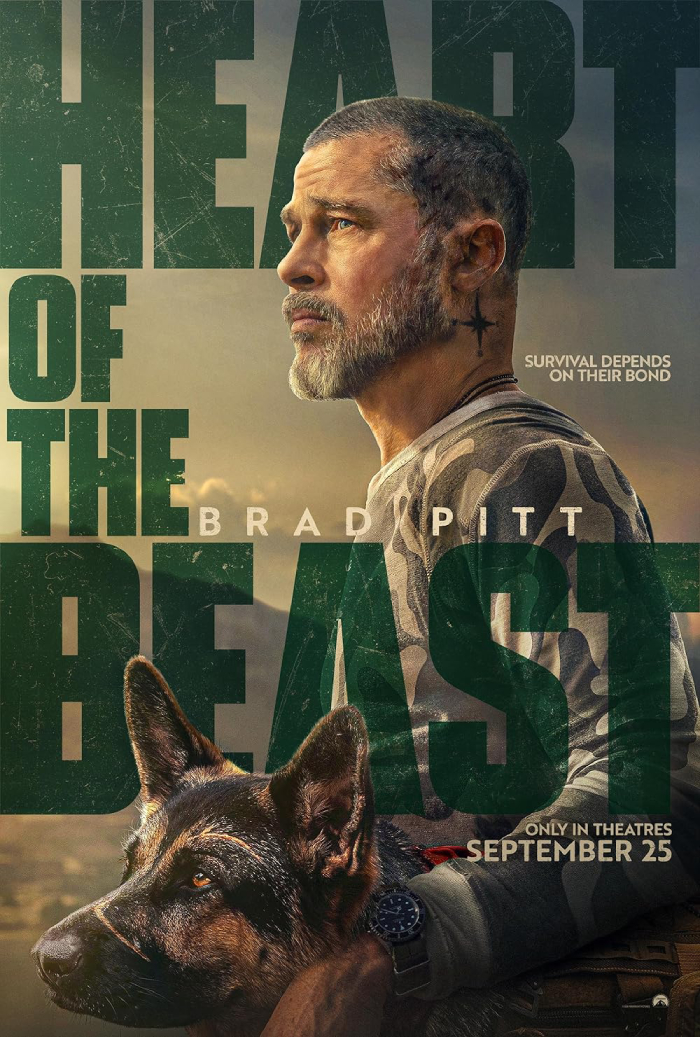
After a harrowing plane crash, a Special Forces officer and his combat dog find themselves stranded deep in the Alaskan wilderness. Together, they are forced into a brutal fight for survival against the elements.
As a movie critic, I am occasionally asked what constitutes a five-star review. The answer is not that simple. A film might have excellent performances, skillful direction, and outstanding cinematography, yet still get only three or four stars. Why? Because a five-star review isn’t just about those elements; it’s also about how the movie affects you as you watch it. It should stir emotions in surprising ways, fully absorb the viewer into its narrative, and leave a lasting impression.
David Ayer has done exactly that with his new survival thriller, “Heart of the Beast.” The story isn’t especially original, but that doesn’t diminish the overall narrative, since the film relies on its ability to draw the audience into the characters’ struggles. Other movies have told this plot, such as Lee Tamahori’s “The Edge,” which starred Anthony Hopkins and Alec Baldwin. When I first watched the trailer for “Heart of the Beast” and saw Brad Pitt and his dog crash their plane in the Alaskan wilderness, “The Edge,” which is a superb thriller, was the first film to come to mind, as well as Joe Carnahan’s “The Grey” and Alejandro González Iñárritu’s “The Revenant.”
The difference between all these movies and “Heart of the Beast” is that this film puts its focus squarely on Pitt’s character, retired Army Special Forces veteran James Belmont, and his traumatized military combat dog, Odin. For 100 minutes, the film has very little dialogue. Belmont communicates with Odin through voice commands, body language, eye contact, touch, and shared routines.
After a 30-year career in the Army Special Forces, veteran James Belmont (Brad Pitt) and Odin, his battle-scarred, three-legged German Shepherd combat-dog companion, retire and move to Alaska, leaving behind people and civilization. Both have PTSD, but the bond between them remains absolute. They fly to a remote part of Alaska for a few days to fish and relax, but then a storm moves in. They take off just in time, but when it looks like they’re in the clear, James suffers a mid-air heart attack, and the plane crash-lands into a lake, ejecting Odin from the plane moments before impact.
They eventually reconnect, both shaken from their ordeal but still very much alive. After checking his map, James realizes that they have an almost 60-mile trek to reach civilization, but they must endure unforgiving terrain, deadly wildlife, and their own shared combat trauma. Just as it looks like they might make it, tragedy strikes, leaving one on the verge of reaching civilization with the other badly injured, but neither will leave the other because of their unbreakable bond.
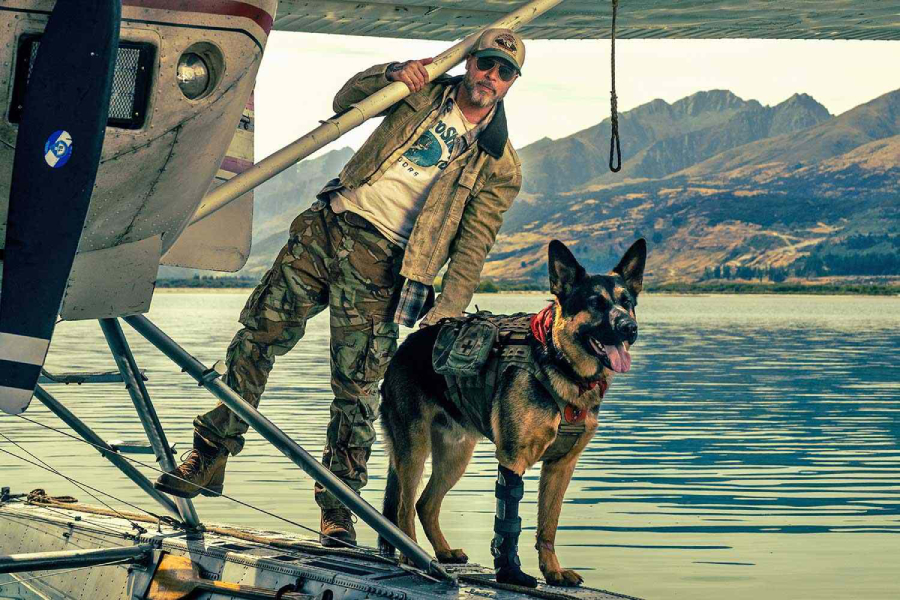
Uber plays Odin, a real-life retired New Zealand working-line German Shepherd and former search-and-rescue mountain dog. Unlike the 2020 film adaptation of “The Call of the Wild,” which starred Harrison Ford, the dog, Buck, was 100% CGI and was evident in every scene. Odin, by contrast, is real flesh and blood, and it shows, and he forms the emotional heart of the story. When he and Pitt interact, it feels natural and convincing. As they manage to survive one impossible difficulty after another, it’s a miracle they get as far as they do together.
It’s one thing to watch a good actor dramatize PTSD as we witness some of their flashbacks during the war, but watching Odin react is simply heartbreaking. Although people often think they could endure awful situations and come out unscathed, watching a canine go through the same ordeal is a different kind of heartbreak.
Writer Cameron Alexander and director David Ayer created a film that shows how difficult it is for humans and canines to forget the horrors of war, no matter how far from civilization they go. The trauma is buried deep inside and surfaces in all kinds of situations, occasionally causing the characters to lose focus when they need to pay attention. Sometimes it becomes a life-and-death struggle, shown in frightening, realistic detail.
Cinematographer Jared Michael Fry captures the brutal but beautiful Alaskan terrain in glorious widescreen. The combination of direction, performances, cinematography, and music creates an emotional roller coaster that never lets up. James and Odin encounter a grizzly bear and a pack of hungry wolves, yet even these dangers seem secondary to the physical demands of their journey. In one tense scene, James and Odin cross a precarious, makeshift bridge made of two fallen tree trunks stretched over a roaring white-water river, and James falls in. Watching him being swept away by the raging rapids, repeatedly striking his head against underwater boulders, was simply harrowing.
In the end, “Heart of the Beast” doesn’t just capture the brutality of the Alaskan wilderness but also the cruelty of PTSD and the heavy burden of trauma that two people who never deserved it have to carry. The connection between James and Odin is unlike anything I have ever seen on the big screen. It touched me in a way I wasn’t expecting and brought me to tears again and again. Kudos to David Ayer for tackling such a difficult topic and bringing it to the big screen, showing us the horrors of war while respecting the deep connection between two souls tied by the same trauma. “Heart of the Beast” is one of the best films of the year.
In Theaters Friday, September 25th