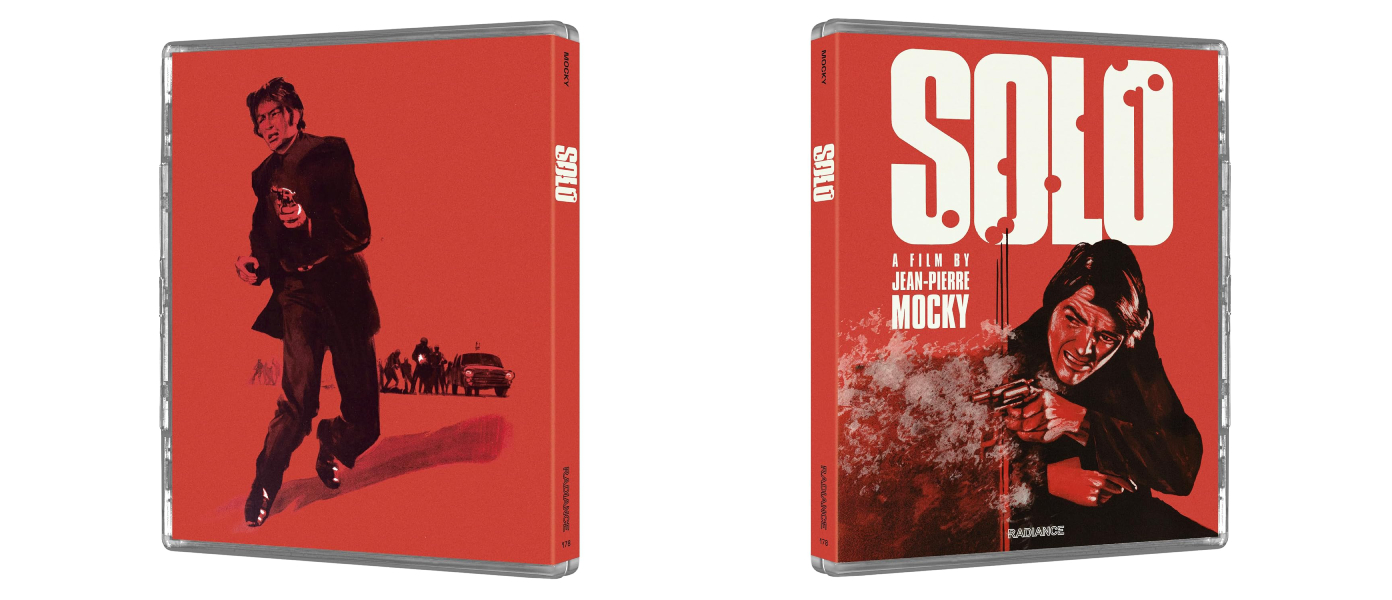

The film follows a carefree violinist and jewel thief who is forced into a dangerous political struggle when he learns his younger brother is part of a radical leftist revolutionary group being hunted by the police.
Actor-director Jean-Pierre Mocky, who co-wrote the screenplay for “Solo” with Alain Moury, begins his film with a massacre, wasting no time announcing the film’s confrontational edge. Three black-clad figures storm an orgy attended by wealthy men and young women. Mocky immediately follows this scene of taboo sexuality and violence with a very different kind of party: a formal affair, complete with orchestra and well-dressed attendees. The two events, seemingly worlds apart, quickly reveal a connection.
Among the three shooters is Virgile Cabral (Denis Le Guillou). Among the musicians is violinist Vincent (Mocky), Virgile’s estranged brother, who also happens to be a jewel thief. When Vincent tries to reconnect with Virgile, he discovers that the police are looking for him in connection with the massacre. Determined to protect his brother, Vincent is pulled into the activities of a youth revolutionary group whose violent actions threaten to consume everyone around them.
Originally released in France in 1970, “Solo” arrives with the lingering shadow of 1968 hanging over it. Radiance’s packaging describes the film as a satirical crime drama, though the satirical angle may be more apparent to viewers with a stronger grounding in the period’s political unrest. Even with that context going over my head, “Solo” is a captivating film. Mocky moves the story at a breakneck pace, weaving together the revolutionaries’ increasingly deadly actions with Vincent’s desperate search. The film has the urgency of a thriller, even when its political undercurrents remain elusive.
Mocky’s Vincent is also an interesting protagonist. He is an unconventional hero, and his criminal background complicates the moral distinction between him and the young radicals. He doesn’t seem interested in preventing anything the group has planned. However, his concern for Virgile gives the film an emotional throughline, grounding the political and criminal elements in a family story. “Solo” remains gripping even though its satirical context may not translate.
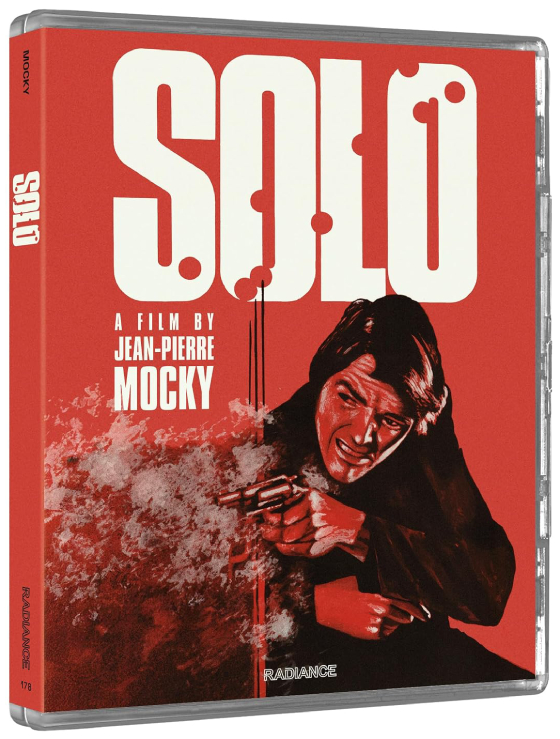
The film, released on limited-edition Blu-ray™ by Radiance Films, arrives with a new 4K transfer and the film’s original mono soundtrack. The image quality is pleasingly organic, offering a film-like texture. I did feel like the colors looked off at times, though that might have been Mocky’s intent rather than a flaw of the presentation. The film’s audio is clear, with dialogue and music coming through cleanly with no noticeable hiss or pops.
Extras include interviews with Mocky, actress Anne Deleuze, and Mocky’s assistant and friend, Eric Le Roy. An image gallery is also included. The limited edition also contains a booklet featuring two interviews with Mocky from around the time of the film’s release.
Although the historical context of “Solo” was beyond my frame of reference, it still worked for me as a crime drama. It is fast and gripping from its opening moments. Radiance has once again put together an excellent package for an underappreciated film, inviting rediscovery.
Available on Limited Edition Blu-ray™ June 23rd from RADIANCE FILMS
 10k
10k 20k
20k 1.5k
1.5k 2.2k
2.2k