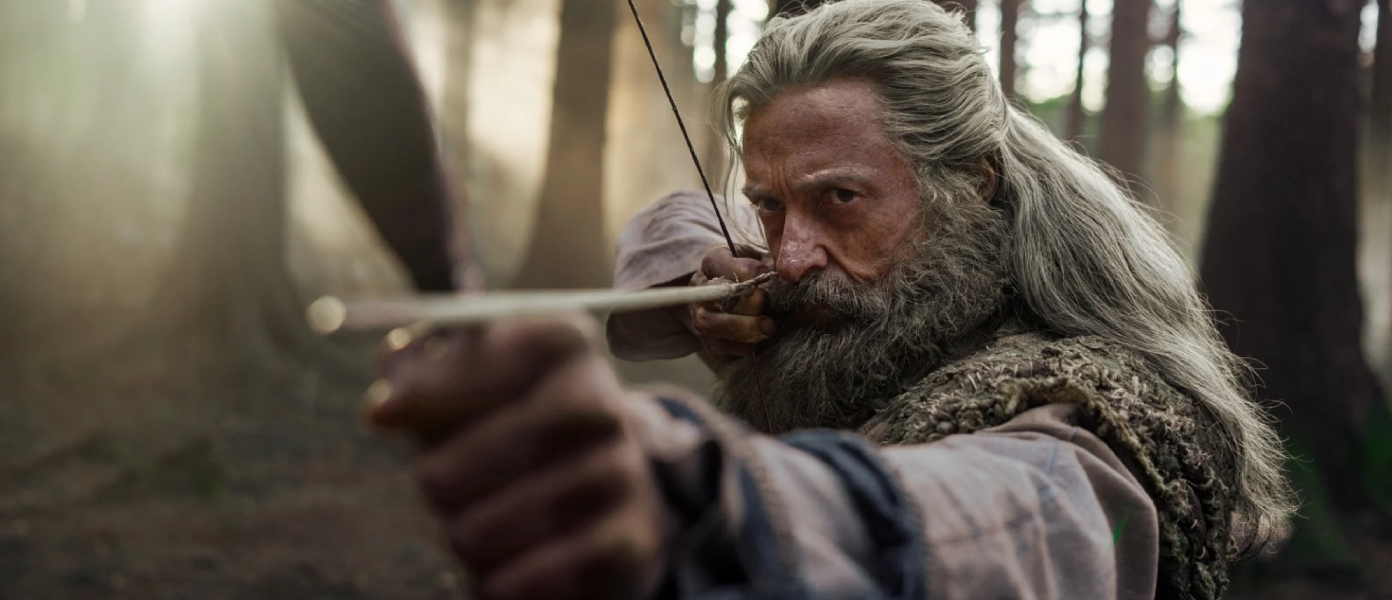

Grappling with his past after a life of crime and murder, Robin Hood finds himself gravely injured after a battle he thought would be his last. In the hands of a mysterious woman, he is offered a chance at salvation.
Hugh Jackman has long been a performer worthy of admiration, but in “The Death of Robin Hood,” he not only lives up to the hype but also manages to raise the bar. He is the perfect Wolverine, and if you’ve seen him sing in movies like “Les Misérables,” “The Greatest Showman,” or even “Song Sung Blue,” there’s no denying Jackman can handle just about anything. But I’ve always known he was capable of more. Thanks to writer-director Michael Sarnoski, we can finally see it. In “The Death of Robin Hood,” he plays the titular character, although not the Robin Hood we’ve come to know from countless films, musicals, and TV shows. He is not the traditional hero—cheery, faultless, and parading around in tights. Instead, he is a dark, weary, and deeply flawed figure, burdened by the sins of his violent past.
Set in northern England in 1247, the story finds Robin living in solitude, his days reduced to a quiet struggle for survival. When his only friend, Edward (Bill Skarsgård), tracks him down and asks for his help, Robin is initially reluctant but eventually agrees. Edward confesses to killing a landowner, taking his place, and starting over with a new family—only to have them taken from him by vengeful relatives. Wounded and desperate, Edward begs Robin to help him recover what’s left.
Their attempt to rescue Edward’s family quickly turns bloody. Edward’s wife is killed amid the chaos, and Robin sustains serious injuries. Edward takes Robin across the sea to a remote priory, located on an island that is run by Sister Brigid (Jodie Comer). Once there, she begins to nurse him back to health. One day, Brigid welcomes a young girl, Margaret, to the priory, whom Robin recognizes as Edward’s daughter. He learns that Edward had fallen victim to another revenge attack, but not before getting Margaret to safety.
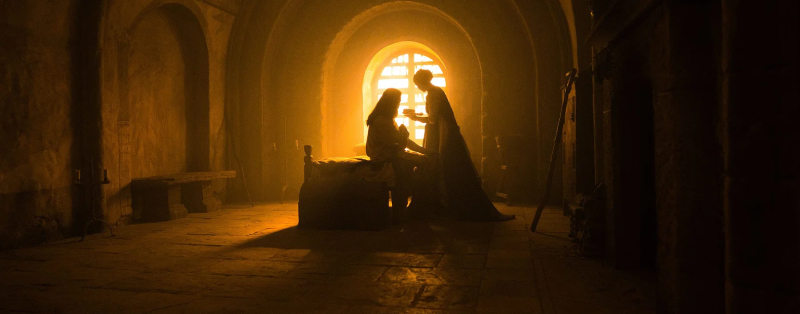
At first, Margaret is shell-shocked and keeps to herself, barely saying a word. But gradually, she begins to trust Robin. He becomes both a guardian and a guide, showing her the ropes, teaching her how to survive, and even crafting a bow for her with his own hands. Worried that the remaining family members will try to storm the island to kill him, he prepares Margaret for battle, but at the same time, a leper who works with Brigid recognizes Robin and reminds him of a life he took many years ago, someone very close to Brigid. Robin finds himself at a crossroads: does he remain to shield those who depend on him, or walk away in hopes that the danger will follow him, leaving everyone else in peace?
“The Death of Robin Hood” takes its time unfolding, but trust me, it never drags or loses your interest. Jackman pours his heart into playing Robin—you’re right there with him, convinced by every move he makes. He recalls killing men, women, and children at one point in his life, and never once flinches. The mythology of the man we thought we knew slowly fades away as the Robin we are seeing onscreen strips away all layers of humanity to reveal a monster, a brooding, violent outcast who’s dealing with the guilt and the habitual violence of his past. When he bonds with Margaret and Brigid, a sliver of humanity surfaces, and for the first time, Robin is forced to face genuine remorse for the destruction he’s caused.
The first half of the film is particularly brutal, and Sarnoski doesn’t shy away from the horror. As someone who is a fan of horror films, even I found the violence to be highly graphic and visceral, making me squirm a few times in my seat. Thankfully, the filmmakers use gory practical effects rather than CGI. The performances by Jackman and Comer are what make the film work, but make no mistake: this is Jackman’s movie. He dominates each moment with a raw power that’s impossible to ignore, and awards attention feel inevitable. In many ways, “The Death of Robin Hood” comes across as a medieval western, with Jackman’s Robin echoing the tragic, haunted figures of classic gunslinger tales.
There is no happy ending, as the title suggests, and watching Robin accept his fate, something he could have very easily avoided, makes you feel a sense of empathy for him. For once in his life, he has done the noble thing, and nobody else has to suffer because of him.
In Theaters Friday, June 19th
 10k
10k 20k
20k 1.5k
1.5k 2.2k
2.2k