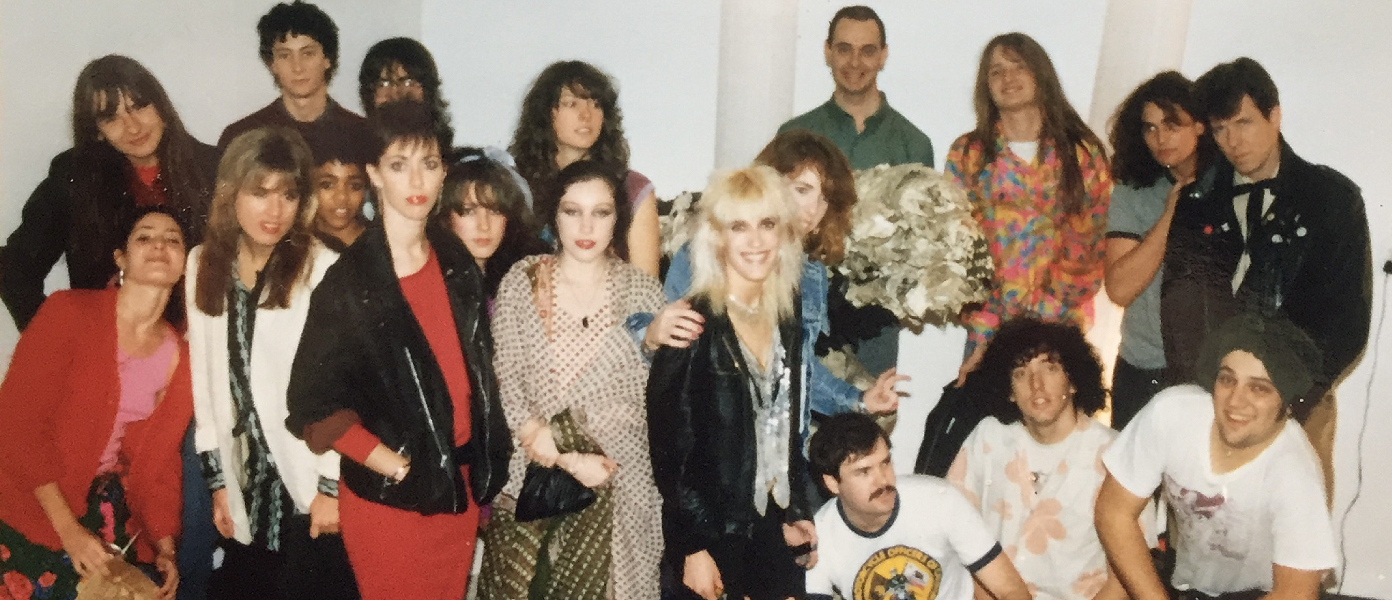

A scene of no values, where climbing to the top means climbing into bed, cheap thrills fill the date book, and Rock ‘n’ Roll is Death & Destruction!
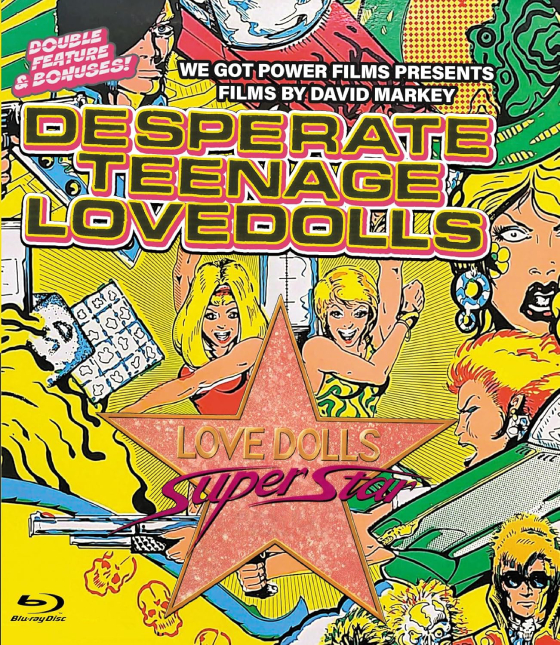
The plot for David Markey’s underground cult film “Desperate Teenage Lovedolls” is overly simple. After a row with her mother, teenager Kitty Carryall (Jennifer Schwartz) and her bandmates, Bunny (Hilary Rubens) and Alexandria (Kim Pilkington), collectively known as the Lovedolls, run off to Los Angeles in search of fame and fortune as rock stars. The runaways steal and beg for money, living on the streets before eventually catching the attention of a record executive, Johnny Tremaine (Steven McDonald), who promises them a record deal (with obvious strings attached).
The Lovedolls’ meteoric rise to fame is unbelievable, much like the movie as a whole. Shot on Super-8, this no-budget film is the epitome of DIY filmmaking — nonsensical storytelling, lo-fi production values, and blown-out performances from a group of non-actors. Even at just 50 minutes, the film’s thin narrative and deliberately chaotic style make it feel longer than it is. Some viewers will appreciate the film’s (and its sequel’s) messiness and quirkiness; for me, it quickly became an obstacle.
“Desperate Teenage Lovedolls,” the first feature on a double-feature disc, sports a transfer that appears to be limited by the source elements. The image looks rough, frequently out of focus, and is scratched with dirt and debris prevalent throughout. Motion is unusual, like a silent film shot at an odd frame rate, then displayed at 24 frames per second. It looks like frames are missing, and the movement constantly jitters. The sound, presented as a 2.0 DTS-HD track, is fine, though it was clearly added after the movie was photographed.
The sequel, “Lovedolls Superstar,” also included on the disc, runs significantly longer, roughly 80 minutes, but is really just more of the same, with nonsensical storytelling built around characters who happen upon each other and instantly reform bonds or plot revenge. Without saying too much for those concerned about spoilers, the Lovedolls reunite and attempt to take the rock world by storm again while dealing with various individuals seeking revenge for events from the first feature.
It is inherently goofy, keeping with the punk atmosphere, but a tad more entertaining than its predecessor. The acting across the board is still overdone, and the photography is still rough (and often out of focus). These DIY projects frequently don’t land for me, and neither of the films here changed that perspective.
Like “Desperate Teenage Lovedolls,” “Lovedolls Superstar” looks rough—similarly dirty and debris-ridden, with a weird motion. Some viewers will enjoy the aesthetic, which gives the pair of films a more authentic punk feel. There are 2 audio tracks for “Superstar,” a 5.1 and a 2.0 DTS-HD mix. I chose the 2.0 mix, which felt more suitable given the state of the materials. It sounds good, offering a clean and clear aural experience that the film’s visuals lack.
The disc is split into menus for each movie, with each menu offering a different selection of special features. “Desperate Teenage Lovedolls” features a music video, 10 minutes of deleted scenes, a featurette, a panel on the 40th anniversary of the movie, a trailer, and a commentary track. “Lovedolls Superstar” features many deleted scenes, a trailer, and a commentary track. Between the two films, there are a lot of features for fans to dive into.
I’m clearly not the ideal audience for either film. However, MVD Visual’s disc offers a generous package for these movies. For viewers drawn to this type of off-the-wall no-budget cinema, underground filmmaking, or the films’ music-scene connections, this disc is worth a look.
Now available on Blu-ray™ from MVD Visual
 10k
10k 20k
20k 1.5k
1.5k 2.2k
2.2k