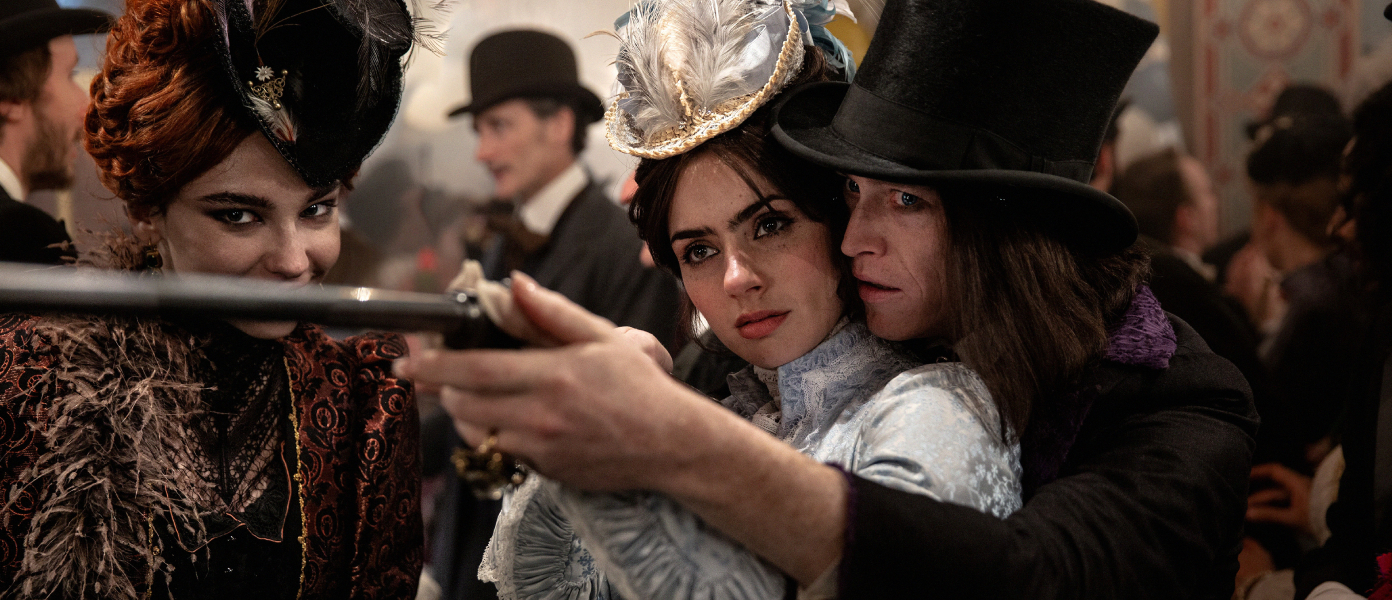

When a 15th-century prince denounces God after the loss of his wife, he inherits an eternal curse: he becomes Dracula. Condemned to wander the centuries, he defies fate and death, guided by a single hope – to be reunited with his lost love.
Count Dracula holds a unique place in cinematic history, having appeared in more than 200 films—an achievement that makes him one of the most frequently adapted characters on screen. While countless directors have offered their interpretations of Bram Stoker’s original novel, Francis Ford Coppola’s 1992 adaptation, starring Gary Oldman, is perhaps the most recognizable. Despite its promise—boasting an impressive cast and ambitious direction—the film ultimately fell short for me. It lacked the suspense and fright one might expect, and even with a talented ensemble, the performances, notably Keanu Reeves’s, were inconsistent.
My admiration for Luc Besson’s work is longstanding; “Léon: The Professional” remains a personal favorite, and I have thoroughly enjoyed “The Big Blue,” “La Femme Nikita,” and “Lucy.” Thus, the announcement that Besson would helm a modern retelling of Dracula immediately piqued my interest. His version, while rooted in elements of Stoker’s narrative, ventures further: it is a sweeping, tragic romance spanning centuries, focused on Dracula’s enduring search for his reincarnated wife. Rather than portraying the vampire solely as a villain, Besson presents him as a “love-mad hero,” a characterization that resonated with me. I have a particular fondness for love stories, and this adaptation vividly illustrates the lengths Dracula will go to in order to reunite with his beloved, as well as the profound suffering he endures four centuries after her death.
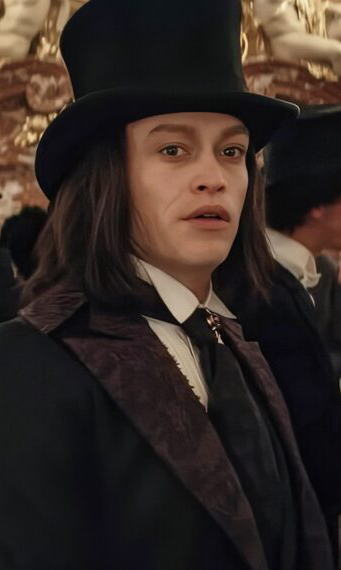 The narrative begins in the 1480s in Eastern Europe, where Prince Vladimir of Wallachia (Caleb Landry Jones) and his wife, Elisabeta (Zoë Bleu), reside in a picturesque Romanian castle. When Vladimir departs to battle the Ottomans, he assures Elisabeta of his swift return. Tragedy strikes, however, when she is ambushed and killed during a horse ride. Devastated by her death and feeling betrayed by his faith—having prayed for her protection—Vladimir renounces God and transforms into Count Dracula. He spends the next 400 years in anguished anticipation, awaiting the return of his wife’s soul.
Unlike most adaptations that focus on Dracula’s relationship with Mina, Besson’s film follows the vampire’s relentless centuries-long quest for Elisabeta’s return. The result is a portrayal that, while acknowledging Dracula’s monstrous nature, emphasizes his unbearable loneliness and longing—a promise of eternal togetherness that remains painfully unfulfilled.
Caleb Landry Jones’s portrayal of Dracula adds a new dimension to the legendary figure. While his vampiric nature is never in doubt, Besson’s vision reveals a romantic and vulnerable side. After Elisabeta’s death, Dracula roams the earth for centuries, desperately searching for her. Realizing the enormity of the world, he devises a hypnotic, magical perfume to make himself irresistible to women—hoping it might draw his lost love back to him.
When he encounters Elisabeta’s reincarnation in Paris, 1880, their reunion is charged with emotion. Although she does not recognize him at first, Jones conveys Dracula’s restraint and longing through subtle, expressive acting, particularly in his eyes. The audience is left yearning for her to remember. When she finally does, the intensity of their connection is palpable; still, given the story’s roots in Stoker’s novel, one senses that a happy ending is unlikely, which only deepens the narrative’s poignancy. The chemistry between Jones and Bleu is undeniable; their scenes together are suffused with genuine feeling.
Characters like Renfield, Van Helsing, and Dracula’s three brides are absent from the film. Jonathan Harker (Ewens Abid) does appear, but his role is drastically reduced—he’s there mainly to hand Dracula a photo of his wife Mina, hoping it will spare his life, in the name of love. It’s at this point that Dracula realizes Mina is actually his beloved Elisabeta, reborn. Christoph Waltz plays a character known only as Priest, who seems crafted as a “Van Helsing-like” figure: a determined, sarcastic vampire hunter, with Waltz clearly enjoying himself.
Visually, the film is a feast. Cinematographer Colin Wandersman captures the grandeur of Romania and the charm of Paris in lush widescreen shots, while Danny Elfman’s rich, evocative score beautifully accentuates the film’s central romance. It is gratifying to see Luc Besson’s return to directing, and I look forward to discovering what he does next.
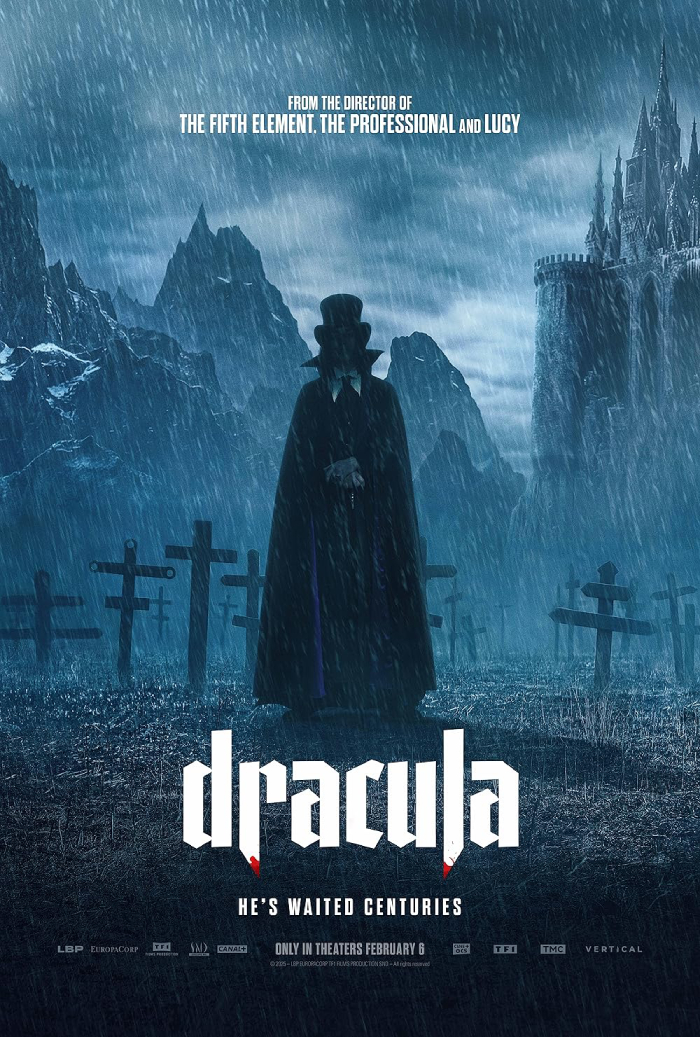
In Theaters Friday, February 6th
 10k
10k 20k
20k 1.5k
1.5k 2.2k
2.2k
Great Movie!