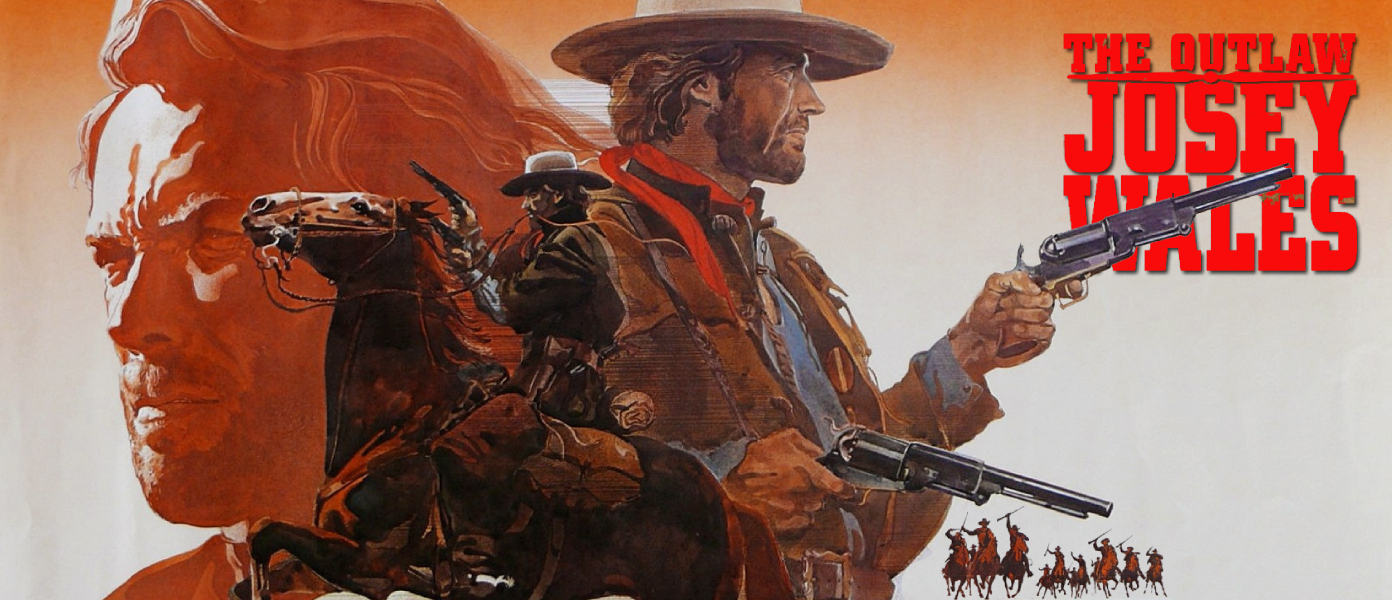

Missouri farmer Josey Wales joins a Confederate guerrilla unit and winds up on the run from the Union soldiers who murdered his family.
In Cormac McCarthy’s ‘Blood Meridian,’ the controversial author established an allegorical connective tissue of American imperialism from the days of Westward expansion to the War in Vietnam. In his novel set during the 1840s, The Kid joins the Glanton Gang, a group of scalp hunters killing and pillaging their way through the Southwest and Mexico. One gang member – known as Judge Holden or The Judge – is the ultimate embodiment of endless War and genocide. He seems not to be of this world with his unrelenting power and expansive knowledge.
“The Outlaw Josey Wales” does not contain a Judge Holden character, but a fair amount of the film’s journey is akin to a descent through hell. Set right as the Civil War is coming to its bloody close, people passing through towns carry the scalps of murdered Indigenous for sale, snake oil salesmen are promising Protestant meritocratic success, and anyone not carrying a gun is easy prey. The screenplay, co-written by Philip Kaufman and Sonia Chernus, acknowledges the plight faced by Indigenous communities and marginalized people attempting to survive in a country where white supremacy and manifest destiny went unchallenged. The screenplay’s politics also reflect Eastwood’s libertarian-leaning views, where governments are enemies and people should be left alone to forge their own path. Yet, here there is less of an individualist ideology, but an explicit endorsement of community and peaceful coexistence, “governments don’t live together, people live together.”
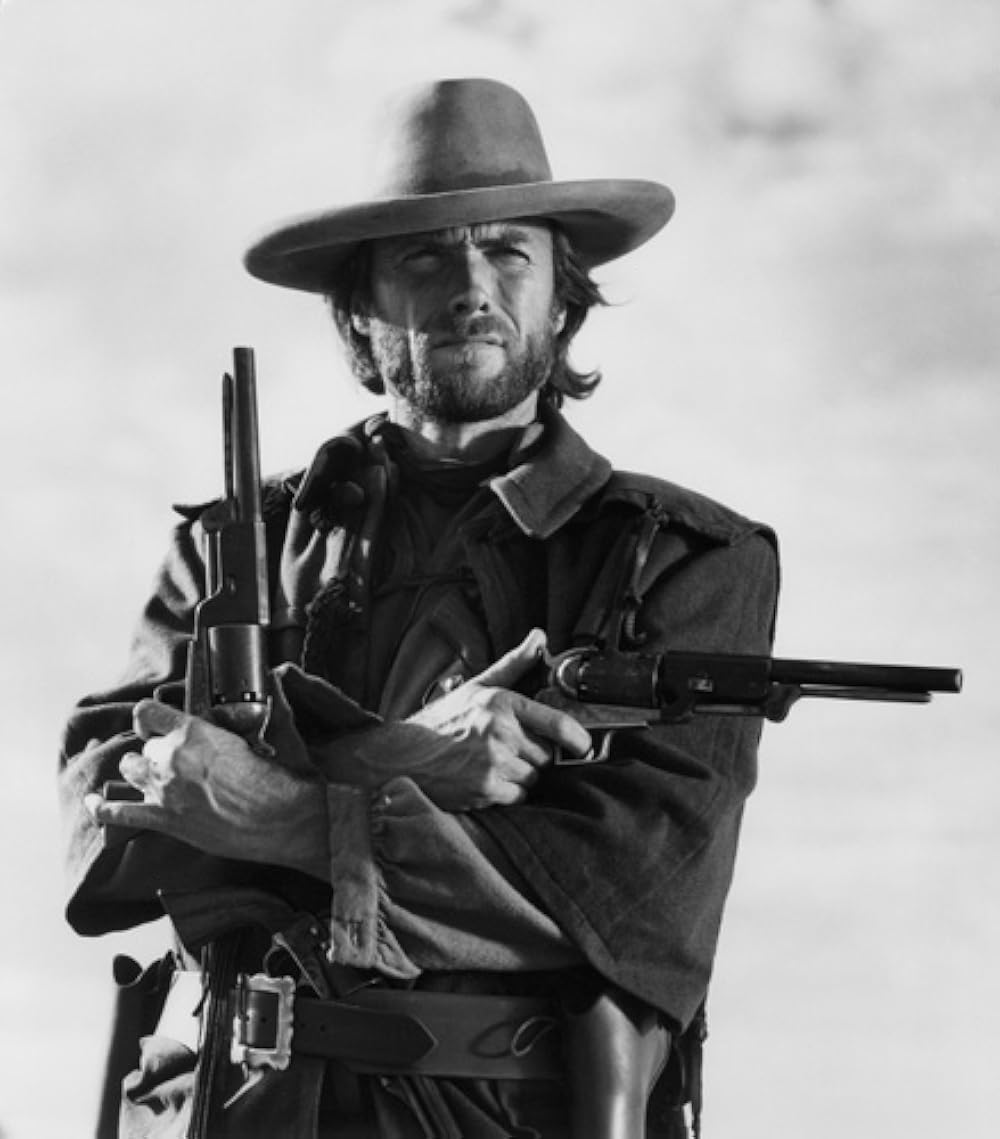 Shot on DeLuxe film, Cinematographer Bruce Surtees captured the scenic autumnal landscape of Northern Arizona, establishing some much-needed beauty for the brutal setting. Nothing here feels inauthentic since the entire film was shot in various locations, mostly in nature. The action is sensational, with a variety of dangerous-looking stunts and thrilling shootouts. Some of the thoughtfully orchestrated shootouts look like they inspired John Woo with his similarly balletic sensibilities. Even the titular character dual-wields his pistols like Chow Yun-Fat.
Things are quickly set into motion as the film opens with Josey Wales’s family being slaughtered by Union soldiers. After surviving the attack, the former Confederate soldier Josey embarks on a quest for revenge. Under a blue-filtered landscape, Josey and his guerrilla unit carry out ambushes against the Union Army under the leadership of Captain Fletcher (John Vernon). But their bushwhacking campaign ends after General Lee surrenders at Appomattox. Under the promise of peace, Fletcher orders his unit to throw down their arms and pledge allegiance to the Union. However, this is all a ruse by Captain Terrill (Bill McKinney), who orders his men to fire their rifles and a Gatling gun, massacring the surrendering Confederates. Unsurprisingly, Josey shoots his way out of the trap and mistakenly believes that Fletcher set up his unit.
As Josey continues searching for freedom from encroaching Union forces and marauding gangs, his legend grows, significantly increasing his bounty. As expected of a character played by Eastwood, he does not care or cower in fear. He either ridicules or spits out his tobacco on everyone and anything that irritates him. As he crosses paths with Lone Watie (Chief Dan George), the elder survivor gives a heartbreaking chronicle of the Indigenous genocide. Josey goes on to avenge marginalized people, and before long, attains a motley crew of diverse individuals. He is the ideal cowboy for his ability to gun down nefarious men while choosing diplomacy over War with a tribe of Comanches. Eastwood’s characters over the years have been mostly two-dimensional, yet there is a depth to Josey, and Eastwood turns in one of his best performances of the 1970s. As does John Vernon, playing a man conflicted by his duty to the federal government to stop the outlaw, and his empathy for Josey.
Unlike “Rawhide” or “Bonanza,” which glorified the days of Western expansion, “The Outlaw Josey Wales” is an anti-Western. It does not revere the settler colonialism of the West and has a mostly keen sense of justice. Josey and his newfound gang only succeed when they come together. Upon finding an abandoned home, the group staves off attacks by Terrill and his men. After Josey doles out his vengeance, the townspeople tell Rangers, looking for him, that he has perished, and Fletcher lets him escape. It seems Josey is riding off to a peaceful life, but as McCarthy stated in Blood Meridian, “War was always here. Before man was, War waited for him. The ultimate trade awaits its ultimate practitioner.”
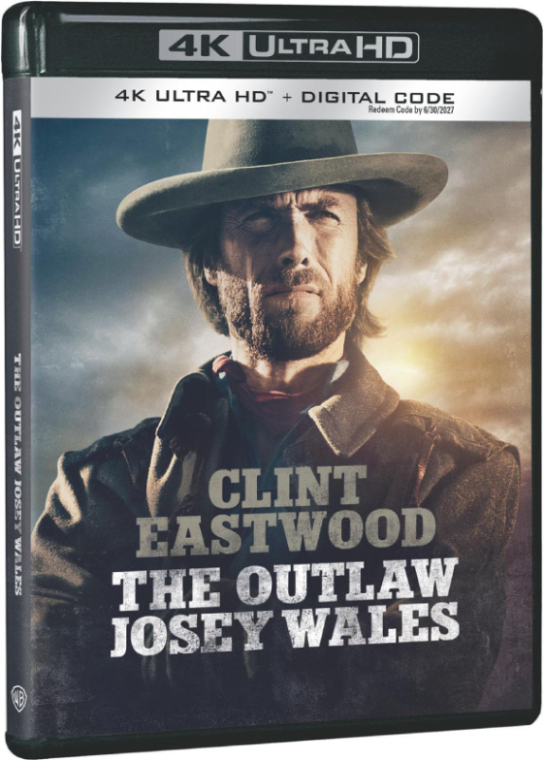
Now available on 4K Ultra HD™
 10k
10k 20k
20k 1.5k
1.5k 2.2k
2.2k