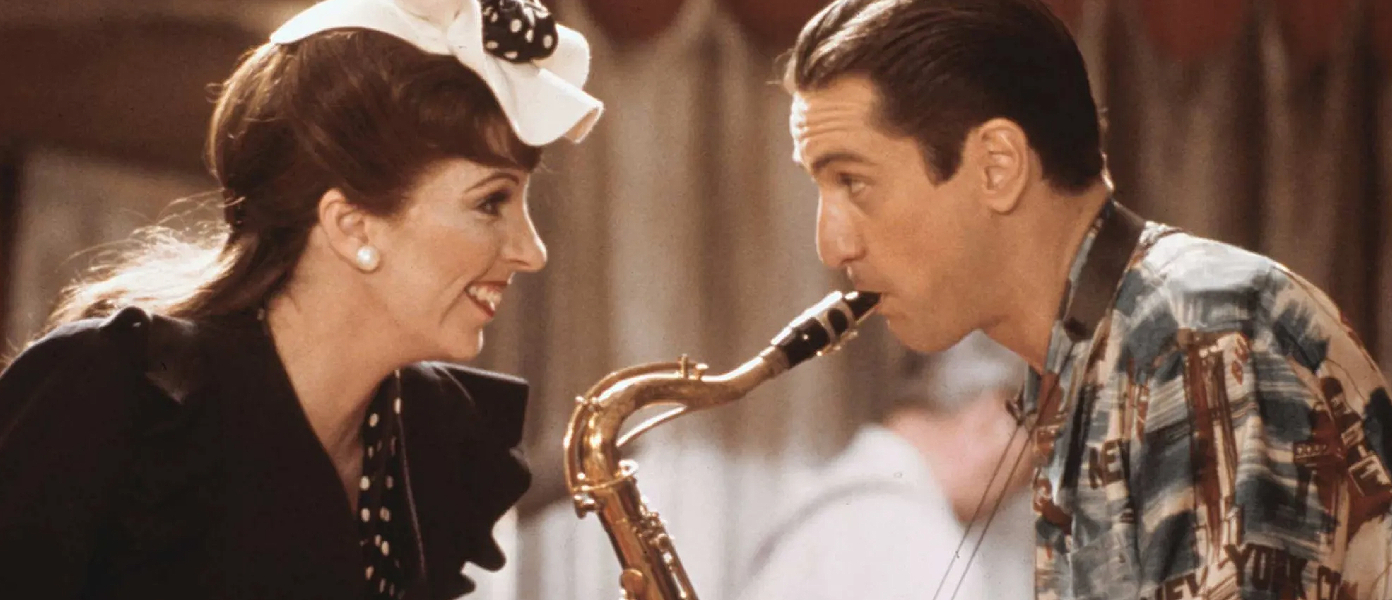

An egotistical saxophonist and a young lounge singer meet on VJ Day and embark upon a strained and rocky romance, even as their careers begin a long, uphill climb.
Released in 1977 on the heels of the commercial and critical success of “Taxi Driver,” “New York, New York” burst onto the screen as clearly a labor of love for director Martin Scorsese. Brimming with New York sensibilities, the somewhat experimental and improvisational film takes several chances, though it rarely succeeds outside of the dazzlingly photographed musical numbers.
Liza Minnelli gets top billing as Francine Evans, a member of the Women’s Army Corps now back home after the end of World War II. Longtime Scorsese collaborator Robert De Niro is Jimmy Doyle, an aspiring saxophone player with a pushy, belligerent demeanor that is more than a little off-putting, not only to Francine, but nearly everyone else he encounters, including the audience. According to Scorsese and the producers interviewed on the special features disc, De Niro’s loudmouthed conduct is intentional, but it’s still annoying.
The uneasy back-and-forth between Doyle and the various band members, between Doyle and Evans, combined with depressingly repetitive dialog may actually offer a case study in marginal and tedious screenwriting, fueled in no small part by Scorsese’s and De Niro’s penchant for frequent improvisation. Their technique worked to good effect in “Taxi Driver” – most notably in the “Are you talking to me?” scene – but in this outing, it feels overwrought, as if the two film industry veterans are desperately searching for something that just isn’t there.
The dark themes dealing with emerging creativity, combined with massive egos, clearly presented a challenge to translate to the screen. The dramatic elements focus almost exclusively on the dysfunctional aspects of Francine’s and Jimmy’s relationship, with little emphasis on the career success that they both achieve and which is in turn largely responsible for the couple’s extended separations – Jimmy hardly knows his own son (Adam David Winkler), however much Jimmy, Jr. clearly admires his dad. Francine eventually becomes a movie screen idol, and Jimmy leads a highly successful, sought-after big band, yet Scorsese’s meandering storyline glosses over these enviable trajectories over the years.
The first cut of the film was four-and-a-half hours. The original theatrical release ran just over two-and-a-half hours, but due to poor box office response in the U.S., it was shortened further for the European market. It would be helpful to view a restored four-hour-plus version to see what was cut from the presumably improved renderings.
The classic title song was composed by John Kander and Fred Ebb, intended for Liza Minnelli, but it was Frank Sinatra’s version released in 1980 that became best-known, arguably and ironically his signature song. Minnelli performs it superbly – it’s hard to see why her original take on the unforgettable melody and lyrics didn’t catch fire with the public the way Sinatra’s cover did only a few years later.
The musical numbers, despite a fair amount of overacting by both Minnelli and De Niro, mark virtually all of the high points of the film. The unstable relationship between Evans and Doyle may have served to excise some of Scorsese’s demons, but its excesses detract from the narrative’s potential. Now available on 4K Ultra HD™ and Blu-ray™, packed with special features, “New York, New York” takes a nostalgic look at post-World War II musicals during Hollywood’s Golden Age, infused with a 1970s sensibility.
Available on 4K Ultra HD™ and Blu-ray™ Combo August 11th

 10k
10k 20k
20k 1.5k
1.5k 2.2k
2.2k