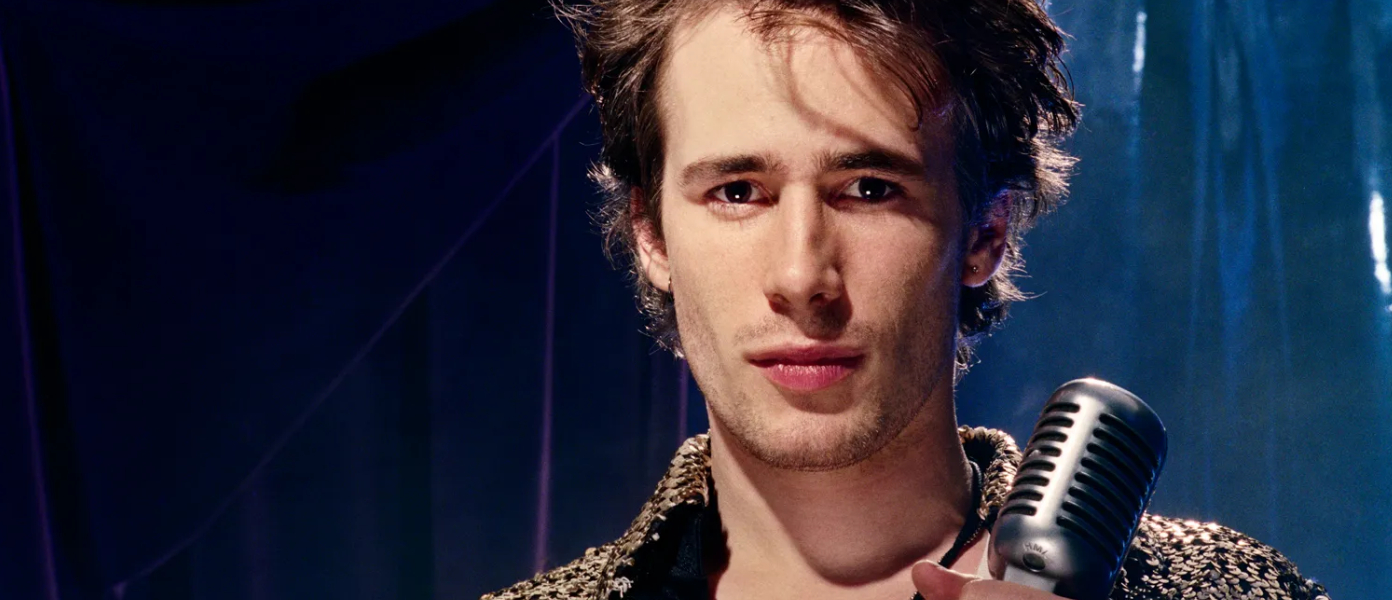

Never-before-seen footage, exclusive voice messages, and accounts from Jeff Buckley’s inner circle paint a captivating portrait of the gifted musician who died tragically in 1997, having only released one album.
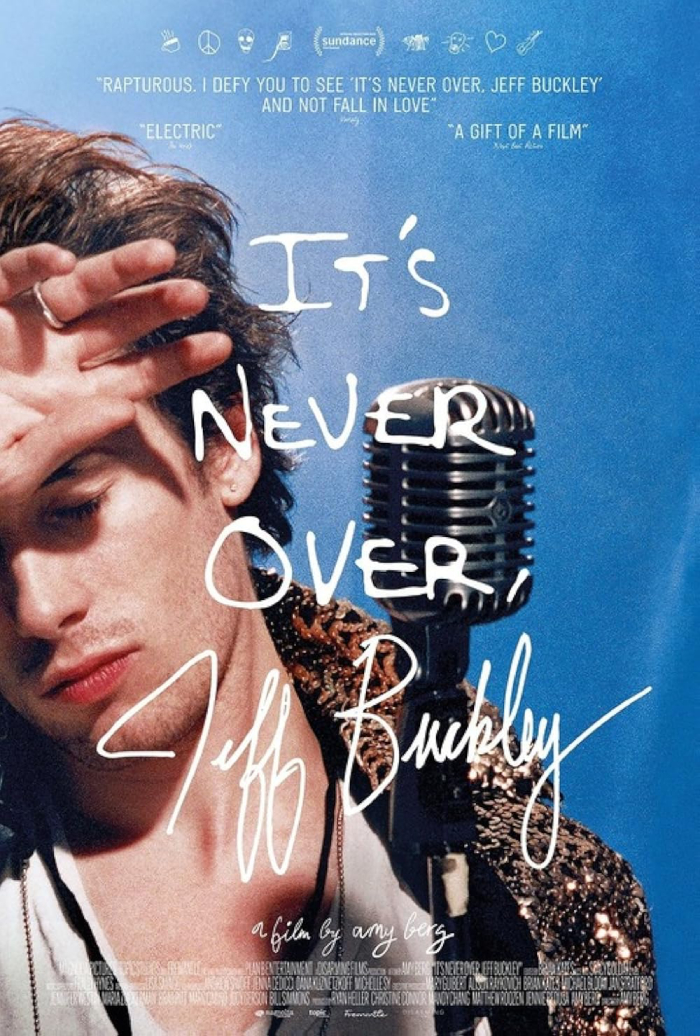
How can one man have an incredible, life-lasting impact on the world after just one album? Is someone really that great a musician? What brings a person like that to the forefront, past all the noise and haze of fame, to become recognized universally as one of the greatest singers of all time? “It’s Never Over, Jeff Buckley” dives deep into these exact questions using unseen footage, decades-old voicemails, and interviews with people closest to the titular figure to set the record straight and cement Buckley’s place in music history. By painting an intimate portrait of the artist, the documentary highlights Buckley’s greatness without lionizing him deeply or waxing too poetic. Instead, the documentary paints a highly nuanced image of Jeff Buckley, with an incredible voice delicately treading the line between legend and person, accompanied by bombastic visuals and gorgeously rendered visions from the singer’s own notebook, to great effect.
Jeff Buckley might be one of the world’s greatest singers, ever. With just one album under his belt, he died before he could cement his reputation, but decades after releasing “Grace,” the world has come to embrace him as the angel he truly is. His tragic story fits neatly in the ‘90s era of grunge-y garage stars with soulful vocals. Unlike the grunge bands of that era, Buckley took inspiration from Nina Simone and Nusrat Fateh Ali Khan. His incredible melodic memory and ability to synthesize completely disparate genres allowed him to craft tunes so haunting that it took years for them to find their proper adoration. What the doc so closely follows is Jeff’s personal life from beginning to end, with a succinct look at what made him who he is, how he launched his career, and how his life ended tragically before his second album.
The doc starts at the very beginning, in what might seem too far back. It’s careful to contextualize his mother’s teen pregnancy and establish, from the very beginning, his tumultuous relationship with his dad. Tim Buckley abandoned the two to pursue a music career. The mark it left on Jeff can be measured by how often reporters and journalists compare Jeff to his father at every possible turn. Tim’s absence had an impact on Jeff’s life from the get-go, and Jeff cast his pursuit of music completely against that of his father. In fact, two months after Jeff first met his dad (they met when Jeff was nine after one of his Dad’s shows), the man overdosed on heroin. Jeff processed this tragedy even as he fixated on music. This theme of his relationship with his father is woven carefully in and out, over and over again throughout the documentary, to provide a critical throughline and demonstrate the thoroughness of documentarian Amy Berg’s craft.
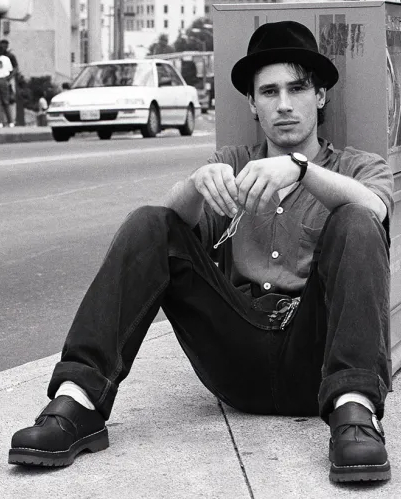 The remainder of the doc charts Buckley’s life from his move to New York, rise to fame, European tour, manic dissension, and subsequent realignment, all to explain his untimely demise. They interview his mother, his bandmates, his first girlfriend, his touring girlfriend, his tour manager, and record execs. They pull leftover voicemails from friends and family. They find interview footage left on the cutting room floor from decades past. They leave no stone unturned in giving the audience as much of Buckley’s story told, as much as possible, in his own words. The eye for detail really brings the doc a layer of verisimilitude that brings the singer to life. It helps that his music perfectly complements all the scenes of the movie.
Buckley’s haunting vocals remain an obsession for musicians. His ability to hear a song and render it back, entirely on exact pitch, continues to shock people. In one scene, Buckley sings The Police’s “Roxanne” in a café, and Ben Harper gushes about how Buckley doesn’t pitch the high notes down. He simply matches what the Police made impossible for karaoke singers around the world. His vocal trills and expansive lungs feel absolutely gut-wrenching, paired with footage of him performing. The audience sees him take one breath and belt out a line with such volume and breath for so long that it seems impossible. Music like that feels perfect to accompany a movie about his life. Somber, playful, raunchy, electric, soulful. Buckley’s got a sound for all of those moods, and the movie makes deft use of his repertoire like that.
To punctuate an otherwise straightforward documentary, Berg incorporates visual segments. Trippy sequences like lyrics, stenciled in Buckley’s handwriting, sizzle to life on the screen as he sings them. His own journal entries stretch across the screen, while others describe his joy or sorrow so obliquely. Certain sections of the doc let spoken words fall away and Buckley (or Led Zeppelin or Nina Simone or Nusret) will accompany these hand-drawn renders of a stick figure swirling and transforming from scene to scene, one minute falling down the scaffolding of a rock concert the subsequent blurring into acid dots on the screen as he falls down the rabbit hole. Those visuals bring soul and break up the story in meaningful ways, allowing the audience to tumble alongside Jeff and feel what he’s feeling. It allows the story to breathe in thoughtful and unique ways.
Thankfully, this music doc doesn’t read like any other story about a musician cut down in his prime. The doc is clear to express that Buckley never abused drugs or alcohol. He never beat or hurt women. He clearly struggled against the weight of touring for two years straight. His interviews towards the end of the tour make him seem flippant, but only as someone who’s done too many interviews. He’s not a terrible human. His melancholy isn’t the sole source of his genius. Thankfully, the doc treads the line perfectly, even directly naming Jeff’s manic-depression on screen. The final tragedy of Buckley’s story seems shrouded in myth, and the doc dispels that by detailing, not painfully, his gleeful swim in the Mississippi River before he planned to record new songs. It wasn’t drugs or self-harm or self-inflicted violence that cut Buckley down in the prime of his life; it was a simple, unfortunate circumstance.
The doc cleverly threads the needle on a renowned musician. Coming to his life decades after Grace finally found its audience validates all the fans around the world. It dispels rumors and myths about the man, carefully painting an intimate portrait of Buckley. It brings him back to vivid life through his friends, his family, his peers. It solidifies his status in the Hall of Fame. “It’s Never Over, Jeff Buckley” manages to perfectly capture the nuances of the music documentary without ever waxing too poetic or lionizing its central figure —a near-impossible task, but one that’s effectively rendered.
In Theaters, Friday, August 8th
 10k
10k 20k
20k 1.5k
1.5k 2.2k
2.2k
Sounds like an awesome movie regards music
I’m a music lover and would like to see what Buckley has to say