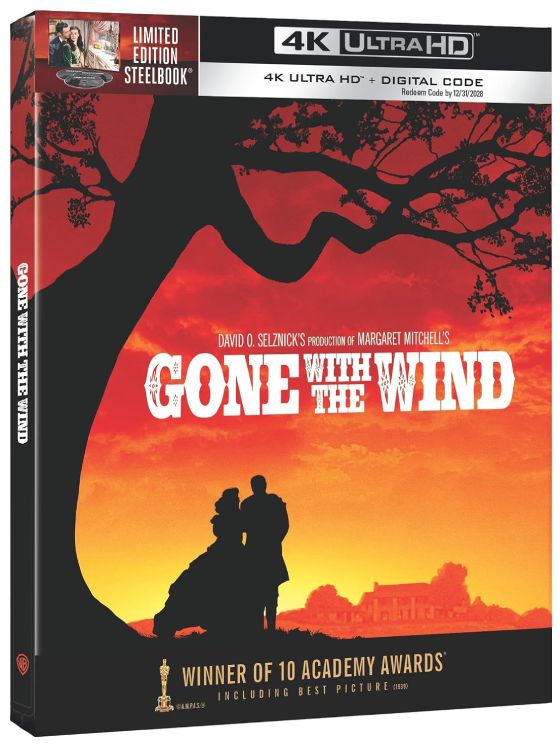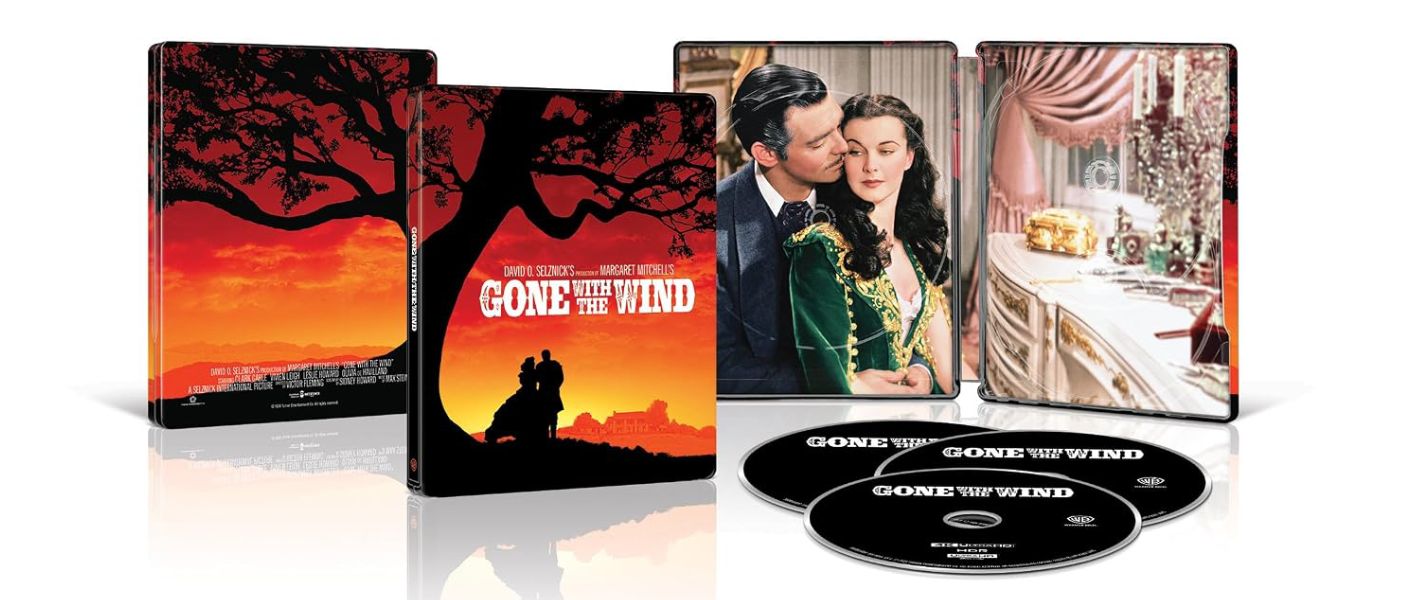

A sheltered and manipulative Southern belle and a roguish profiteer face off in a turbulent romance as the society around them crumbles with the end of slavery and is rebuilt during the Civil War and Reconstruction periods.
There’s a moment in “Gone with the Wind” when Scarlett O’Hara stands outside a rudimentary hospital and looks across a railroad yard full of wounded soldiers. The camera pulls back, pulls back again, until you can hardly make out one individual in the crowd. It’s a stunning image, simultaneously very intimate and absolutely massive. That’s the film’s real strength. It’s a story about one very determined woman, and it makes every moment in her life feel as though it’s taking place across the widest screen Hollywood could possibly build.
Released in 1939, “Gone with the Wind” is a textbook example of the ambition of the Hollywood Golden Age. The sets are huge, the costumes are all very deliberate in terms of who has power and who is after it, and the Technicolor is absolutely electric. The burning of Atlanta is the clearest example. As Scarlett and Rhett are fleeing through the city on horse and cart, the buildings all around them are consumed by flame. It’s not just a big scene; it’s a thrilling one because the danger is so very real for a few minutes. The sheer scale of the production is there to answer one very simple question: are they going to get out?
What sticks with you more than the fire is Vivien Leigh’s Scarlett. She’s not an easy heroine to love. She’s manipulative, she’s impatient, and she’s quite capable of treating other people’s feelings as simply impediments to her own agenda. Much of the film is spent with her chasing an idea of happiness that no longer applies to the life she’s actually got. You can’t help but feel her desperate need to survive as the war strips away the family’s wealth and security. When comfort is gone, she doesn’t sit back and wait for it to be reinstated. She works, she schemes, she deals, and she makes the decisions that a more conventional heroine would never be allowed to make.
That determination is what gives the film so much of its momentum. Scarlett is by no means a passive damsel waiting to be saved, and her resilience is far from neat or saintly. It will at times save the people around her and at other times it will cost them. The film is at its most interesting when it allows both sides of her to be present at the same time. Leigh is absolutely capable of moving from charm to panic to calculation within the span of a single scene, and it’s that which makes Scarlett’s contradictions feel like those of a person rather than a series of separate attributes.
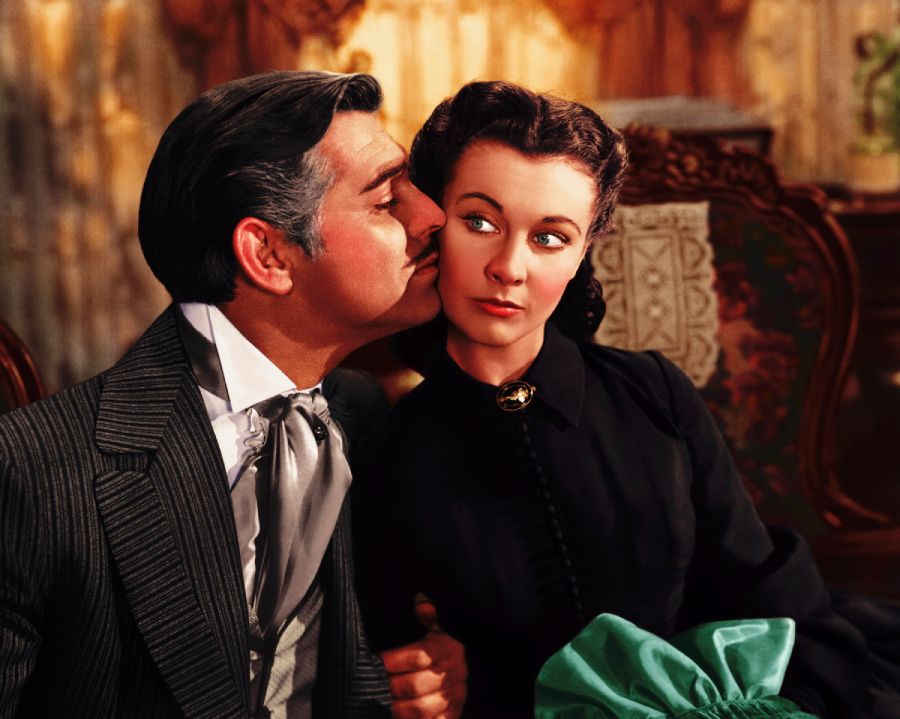
Clark Gable’s Rhett Butler is the perfect person to unsettle her. He sees straight through Scarlett’s act from the off, and their best scenes are really a battle of wits between two people who are absolutely thrilled to have found their match and occasionally furious at it. Gable throws Rhett’s lines at her with such a relaxed, untroubled confidence that Leigh’s quick retorts are even sharper. There’s a more uncomfortable undercurrent to the whole thing in that they both see each other’s strengths and yet can’t seem to give each other what they actually need. The spark of the film is their chemistry, and the ache of the film is the fact that they can’t understand each other.
The supporting performances really give the film texture, and it could easily have been a very big film that just overpowered itself. Hattie McDaniel as Mammy is absolutely wonderful in those scenes with Scarlett. She has that ability to just cut through Scarlett’s justifications with a look or a remark, and McDaniel’s Mammy is a presence in the film that is far greater than the very narrow role she was given. She won the Oscar for Best Supporting Actress, which made her the first black person to win an Oscar. “Gone with the Wind” took home ten of the competitive Oscars, including Best Picture (a record at the time). The accolades show how much the film impressed its first audiences, even if its awards history is also rather uncomfortable.
Max Steiner’s music does as much of the storytelling as the images themselves. The score rises with every major shift in Scarlett’s fortunes and gives both the heartbreak and the hard-won resolve a sense of scale. “Tara’s Theme” is the piece most associated with the film, and it very much earns that status. It can make Tara feel like a warm and comforting place one moment and utterly out of reach the next. You can quite easily imagine the music lingering long after the details of a scene have gone.
None of this in any way means that the film’s portrayal of the South is in any way a harmless period piece. “Gone with the Wind” asks you to mourn the end of the plantation era whilst presenting a very false and romanticized version of what that era was really like. The black people are presented as devoted, content, and essentially just part of the family. Black characters are predominantly confined to the paternalistic, demeaning stereotype. The film’s vision is very much that of the Lost Cause mythology, which presents the antebellum South as something to be remembered in a noble way rather than a society founded on slavery. Its beauty makes that myth even more convincing.
The way the Black cast were treated during the film’s release makes the contradiction absolutely glaring. McDaniel and Butterfly McQueen were both excluded from the Atlanta premiere. When McDaniel won her Oscar, she was seated separately from her white co-stars at the ceremony. McDaniel’s achievement absolutely deserves to be celebrated. So does the talent and the dignity of the woman. But to celebrate her in that way without any reference to the racism of the moment would be to leave out a vital part of the story.
“Gone with the Wind” is still very much worth seeing and not just as a piece of film history. The performances have weight, the images still have the power to astonish, and Scarlett is such a fascinating character precisely because she’s so hard to define. The film knows how to make survival seem expensive and how to turn a look between two actors into something very special. Those are real pleasures.
So too with its failures. The best way to understand “Gone with the Wind” is to watch it with both truths present: as a magnificent achievement of American cinema and as a film which uses those very talents to make a wholly false history look beautiful. Its sheer spectacle is unquestionably worthy of admiration. Its story is something else and demands to be looked at. More than 80 years on, it still has the power to capture our attention and to make us think very carefully about what it is exactly that it asks us to admire.
Available on 4K Ultra HD™ November 3rd